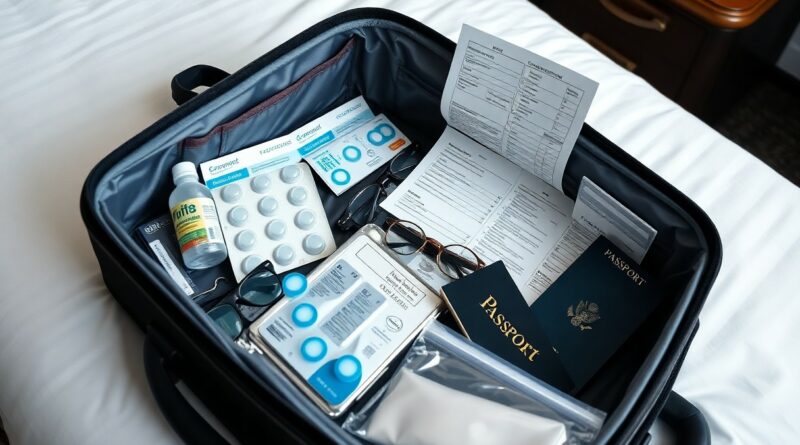
How to Travel Internationally with Disposable Contact Lenses (Complete Packing Checklist)
Contacts are your daily crucial, and losing access abroad can disrupt your entire trip. Carrying disposable lenses across borders requires more than just tossing a case into your bag, especially when security checks, dry cabin air, and varying replacement schedules come into play. Packing extra lenses and solution in carry-on luggage is non-negotiable, as checked baggage delays or losses can leave you without vision correction for days. This guide walks you through every step-from documentation to emergency backups-so you stay prepared without compromise.

Key Takeaways:
- Always carry a copy of your contact lens prescription in both physical and digital formats, especially when crossing borders where pharmacies may require verification before selling corrective lenses.
- Pack at least two extra pairs of disposable lenses beyond your trip’s duration, along with travel-sized saline solution that complies with TSA and international liquid restrictions-store all in your carry-on for immediate access.
- Combat dry cabin air by using preservative-free lubricating eye drops and switching to daily disposables, which reduce buildup and irritation during long flights, such as those encountered on transcontinental routes.
Essential Documentation and Backup Factors
Keep a copy of your contact lens prescription in both physical and digital formats to ensure access during international travel. Unexpected delays or losses can occur, so having backup documentation supports quick replacements. Pack extra lenses beyond your trip’s duration to account for extended stays or mishaps. Perceiving potential disruptions early increases your preparedness and eye health safety.
How to secure and store your prescription copies
Save a scanned copy of your prescription in a password-protected folder on your phone and email it to yourself as a backup. Carry a printed version in your travel documents pouch, separate from the lenses. This ensures access even if your luggage is lost or your phone dies. Perceiving
Calculating the necessary number of extra lenses
Add at least one full week’s supply of extra lenses beyond your expected travel duration, especially for destinations with limited optical services. For a two-week trip, bring three weeks’ worth of disposables. Perceiving
A mid-sized SaaS firm managing remote employee travel found that including an additional 20% in lens supply reduced emergency purchases by half. This buffer accounts for delayed flights, changes in itinerary, or accidental damage. Extending your supply ensures uninterrupted wear, particularly in countries where your brand may not be readily available.
How to Pack Contacts and Solutions for International Flights
Travelers must follow TSA’s 3-1-1 rule for liquids, which allows containers of 3.4 ounces (100 milliliters) or less in a single quart-sized, clear, resealable plastic bag. Solution bottles must fit within this bag and be removed during security screenings, so keep them at the top of your carry-on for quick access. Never pack contact lens solution in checked luggage due to pressure changes and potential leaks.
Navigating TSA and international liquid regulations
Most international airports follow rules similar to the TSA’s 3-1-1 standard, but some countries impose stricter limits or additional inspections. Carry a travel-sized solution bottle clearly labeled with the manufacturer’s name and volume, such as a 90-milliliter Alcon Opti-Free container, to avoid confusion. Always verify specific airline and destination policies before departure.
Best practices for organizing lenses in carry-on bags
Store your lenses in a dedicated contact lens case with a secure snap closure, and place it in an exterior pocket of your carry-on for immediate access. Keeping your lenses separate from liquids reduces contamination risks and speeds up screening. Pair this with a small dry pouch to hold the case when not in use.
A mid-sized SaaS firm’s employee traveling from Chicago to Berlin reported passing through security in under four minutes by using a clear pouch labeled “Contacts & Solution” containing only the case, a single 90ml solution vial, and saline drops. Grouping these items separately from general toiletries prevents fumbling and reduces the chance of confiscation due to disorganized packing. Reusable silicone cases withstand pressure changes better than flimsy plastic alternatives.
Tips for Managing Dry Cabin Air and Eye Comfort
Low humidity levels in airplane cabins often lead to eye discomfort for contact lens wearers. Carry rewetting drops approved for use with your lens type and apply them as needed during the flight. Consider switching to glasses for part or all of the journey to reduce dryness. Assume that your eyes may fatigue faster than usual due to the dry environment. For more guidance, review 10 Tips for Packing Effectively with Contacts.
Combatting eye dehydration during long-haul travel
Extended flights expose your eyes to prolonged dry air, increasing the risk of irritation. Use preservative-free rewetting drops every few hours to maintain moisture. Avoid sleeping in lenses not approved for overnight wear. Assume that cabin pressure changes can intensify dryness, especially on flights over six hours.
When to temporarily remove lenses for eye health
Remove your lenses if you experience persistent dryness, redness, or blurred vision during a flight. This helps prevent corneal irritation and allows your eyes to recover. Assume that limited airflow and low humidity heighten sensitivity, especially on long-haul routes.
Extended exposure to dry cabin air can compromise tear film stability, making lens wear uncomfortable or unsafe. If you notice excessive tearing, light sensitivity, or a gritty sensation, take your lenses out immediately and switch to glasses for the remainder of the flight. Some travelers on a recent transatlantic flight reported needing to remove lenses within three hours due to discomfort, underscoring the importance of having a backup pair of glasses accessible.

How to Maintain Replacement Schedules Across Time Zones
Adjusting your lens replacement timing becomes important when traveling across time zones, as skipping or delaying a change can lead to over-wearing lenses and irritation. Treat your wear schedule by Coordinated Universal Time (UTC) rather than local time to maintain consistency, especially on long-haul flights spanning multiple zones.
Tracking lens wear time during international transit
Start counting wear time from the moment you insert your lenses, not by local departure or arrival times. A traveler flying from New York to Tokyo might wear lenses for what feels like two full days due to the time change, increasing the risk of dryness and corneal stress without accurate tracking.
Setting reminders for fresh lens applications
Use your smartphone’s alarm function to schedule lens replacement alerts based on your original time zone or UTC. For example, if you change lenses daily at 8 p.m. in London, set a recurring alert for 8 p.m. UTC, regardless of whether you’re in Sydney or Los Angeles.
Alarms should include a label such as “Replace Contacts” rather than a generic tone, reducing the chance of dismissal during travel fatigue. Some travelers use dual-time smartwatches to monitor both home and destination times simultaneously, ensuring they never miss a critical replacement window even during layovers or overnight flights.
Emergency Protocols: What to Do if You Lose a Lens Abroad
If you lose or damage a disposable contact lens overseas, immediately switch to your backup pair and store the remaining lens from the affected set. Rely on your spare lenses and saline solution from your carry-on emergency kit while preserving your prescription documentation. Never attempt to clean a lens with tap water, especially in regions with questionable water quality such as parts of Southeast Asia or Central America.
Utilizing backup lenses and prescription copies effectively
Keep a second set of daily disposables sealed in your carry-on and a copy of your prescription in both physical and digital formats. If you lose a lens in a country like Japan or Germany, use your spare pair to maintain wear continuity while contacting your home optometrist. Presenting a valid prescription may allow a local clinic to supply a temporary replacement, even without insurance coverage.
Locating local optical assistance in an emergency
Pharmacies in countries such as France and Australia often have on-site optometrists who can assist with urgent vision needs. Search for signs indicating “opticien” in France or “optometrist” in English-speaking countries. Major cities like Barcelona and Toronto maintain 24-hour optical clinics, particularly near tourist districts or international hospitals.
Start by visiting a national pharmacy chain such as Boots in the UK or Farmacias del Ahorro in Mexico, which are more likely to carry standard contact lens brands and have English-speaking staff. In countries with universal healthcare, like Sweden, optical services may require appointments, but walk-ins are often accommodated for urgent cases. Carrying a translated note of your prescription in the local language can speed up service in non-English-speaking regions and prevent misunderstandings about lens parameters.
Final Words
Always pack your disposable contact lenses in your carry-on, along with a spare pair of glasses and enough solution for the first few days of your trip. Keep your lenses in their original packaging and bring a copy of your prescription in case of loss. For more guidance on adjusting your routine while abroad, refer to Travelling With Contact Lenses – Packing & Flying. Additional tips are available at disposablens.com.
FAQ
Q: How many pairs of disposable contact lenses should I pack for a two-week international trip?
A: A mid-sized SaaS firm employee traveling to Japan for 14 days packed 16 daily disposables, allowing two extra pairs for unexpected delays or handling errors. Always bring at least two additional lenses beyond your trip duration to account for loss, tearing, or extended stays. For weekly or monthly disposables, carry one full replacement set plus backup glasses.
Q: Can I bring contact lens solution in my carry-on luggage?
A: Yes, but it must comply with TSA’s 3-1-1 liquids rule: containers must be 3.4 ounces (100 milliliters) or less and fit inside a single quart-sized, clear, resealable plastic bag. Travel-sized solution bottles are widely available, and most airlines allow multiple sealed solution containers as long as they follow these limits. Larger bottles should be packed in checked luggage.
Q: Do I need a copy of my contact lens prescription when traveling internationally?
A: Yes, carrying a printed or digital copy of your prescription helps when purchasing replacement lenses abroad or clearing customs in countries that regulate medical devices. Some optometrists include an expiration date, typically valid for one to two years. A traveler in France used an emailed prescription to obtain a temporary supply after misplacing a case in Paris.
Q: What should I do if my eyes feel dry during a long-haul flight?
A: Cabin air on flights can drop humidity levels below 20%, increasing discomfort for contact lens wearers. Use preservative-free lubricating eye drops labeled safe for contacts, applying them every two to three hours. Avoid wearing lenses during sleep, even on overnight flights, and consider switching to glasses during travel to reduce strain.
Q: How do I adjust my contact lens replacement schedule when crossing multiple time zones?
A: Stick to the time zone of your departure location for the first 48 hours to maintain consistency, then transition to local time. A nurse flying from New York to Dubai continued her daily lens routine based on Eastern Time for two days before aligning with Gulf Standard Time. Setting phone reminders in both time zones can prevent missed changes.
Q: Is it safe to use tap water to clean my contact lens case abroad?
A: No, tap water may contain microorganisms like Acanthamoeba, especially in regions with less regulated water systems. Always use sterile saline or multipurpose solution to rinse your case. A student in Southeast Asia developed corneal irritation after rinsing her case with sink water, requiring medical attention. Bring a sealed bottle of solution and use bottled water only for external hygiene.
Q: What should I do if I lose a contact lens while traveling?
A: Replace it immediately with a spare from your packed extras. If unavailable, purchase a temporary pair from a local optician or pharmacy-many countries sell common prescriptions over the counter. One traveler in Berlin bought a single daily lens from a pharmacy for €5 after dropping one in a train station. Always keep the website https://disposablens.com/ saved in your browser for fast reordering if shipping is an option.
