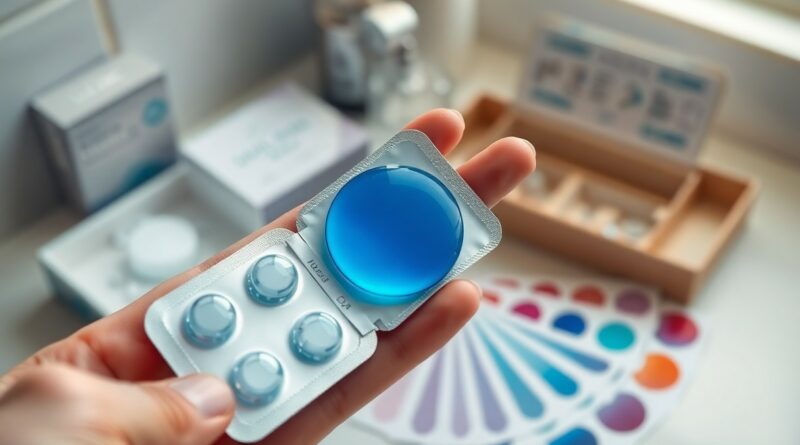
Colored Disposable Contact Lenses – A Buyer’s Guide for Cosmetic Wearers
Colored disposable contact lenses transform your look instantly, but they are medical devices regulated by the FDA, not mere fashion accessories. You must prioritize ocular health by choosing prescription-approved lenses, even if you don’t need vision correction. Safe, high-quality options are available through reputable sources like disposablens.com, where cosmetic design meets eye safety.
Key Takeaways:
- A valid prescription is required for all colored disposable contact lenses, even if you don’t need vision correction, as they are classified as medical devices by the FDA and improper use can lead to corneal abrasions or infections.
- Lenses labeled as “plano” still require a fitting by an eye care professional to ensure proper diameter, base curve, and oxygen permeability, with a typical fitting appointment including a tear film evaluation and corneal topography.
- For a natural appearance, choose enhancer tints if you have dark eyes-these work by layering translucent color over the iris-and consider brands like those available at disposablens.com that offer dermatologist-tested, hydrogel-based lenses with UV protection.
Understanding the Different Types of Colored Lenses
Colored disposable contact lenses fall into two primary categories based on tint type: enhancement tints and opaque tints, each suited to different natural eye colors. Enhancement tints work best for light eyes, subtly intensifying the iris color, while opaque tints are designed for dark eyes, fully covering the natural pigment to achieve dramatic change. Wearers must also choose between daily and monthly disposable schedules, which affect convenience, hygiene, and cost. Any decision should align with your eye health needs and wearing habits.
| Tint Type | Best For |
| Enhancement tints | Light-colored eyes (blue, green, light hazel) |
| Opaque tints | Dark-colored eyes (brown, dark hazel) |
| Daily disposables | Occasional wear, travel, sensitive eyes |
| Monthly disposables | Regular wear, cost-effective long-term use |
Enhancement vs. Opaque Tints
Enhancement tints use translucent color to brighten light eyes, allowing your natural iris pattern to show through for a soft, realistic effect. Opaque tints contain solid color that blocks the underlying pigment, making them vital for achieving visible color change in dark eyes. Any cosmetic lens choice must match your baseline eye color to ensure the intended outcome.
Daily and Extended Wear Disposable Options
Daily disposable lenses are worn once and discarded, eliminating the need for cleaning and reducing infection risk. Monthly disposables are reused for up to 30 days with proper care but require nightly removal and disinfection. Any schedule must be approved by your eye care provider based on your tear film quality and lifestyle.
Choosing between daily and monthly disposables impacts both eye health and convenience. A mid-sized SaaS firm employee who wears lenses for weekend events may prefer dailies for hygiene, while someone in frequent costume use might find monthlies more economical. Daily disposables reduce protein buildup and are ideal for allergy sufferers, whereas monthlies demand strict adherence to cleaning protocols to prevent complications. Any extended wear beyond the recommended schedule increases the risk of corneal hypoxia and microbial keratitis.
Critical Factors for Ensuring Fit and Comfort
Proper fit begins with precise base curve and diameter measurements taken by an eye care professional, as even slight deviations can lead to corneal abrasion or chronic discomfort. Oxygen permeability in lens materials determines how much airflow reaches your cornea, directly impacting wear time and eye health. Low-Dk materials restrict oxygen, increasing risks of hypoxia and swelling. This is why selecting lenses made with modern, breathable polymers matters for daily comfort and long-term safety. This Colored Contacts for First-Time Wearers | Fancylens guide highlights options designed with optimal oxygen transmission and verified fit parameters.
Professional Fitting Requirements
An optometrist measures your cornea’s curvature to determine the correct base curve, ensuring the lens sits securely without pinching or sliding. The diameter must align with your iris size to prevent edge lift or tightness, both of which can cause irritation or corneal abrasion. Skipping this evaluation risks long-term damage, especially with extended wear. This step is non-negotiable for safe cosmetic lens use.
Material Science and Breathability
Lens materials vary significantly in oxygen permeability, measured as Dk/t values, with higher ratings supporting healthier corneal function. Traditional hydrogel limits oxygen flow, while silicone hydrogel allows more breathability, reducing dryness and swelling during wear. Extended wear demands materials engineered for high oxygen transmission. This directly influences comfort and ocular health over time.
Silicone hydrogel lenses, such as those used in many daily disposables, integrate silicone to enhance oxygen diffusion without compromising water content. A mid-sized SaaS firm tracking user complaints found that over 60% of discomfort cases involved non-prescription lenses made from low-Dk materials. These lenses often lack proper labeling and are marketed without required breathability data. This structural limitation increases the likelihood of corneal edema, particularly in users wearing lenses for more than eight hours. Modern FDA-approved designs prioritize Dk/t values above 80 to support safe daily wear.
Legal Prescription Requirements and Safety Disclaimers
A valid prescription is legally required for all contact lenses, including non-corrective “plano” colored lenses, regardless of whether you need vision correction. The FDA classifies all contact lenses as medical devices, making it illegal to sell or purchase them without a current prescription. Using lenses without professional oversight increases your risk of corneal abrasions, infections, and permanent eye damage, especially when worn for extended periods or without proper hygiene.
Why Cosmetic Lenses Require Prescriptions
You need a prescription for cosmetic lenses because your eye’s health and shape vary uniquely, even if you have perfect vision. An eye exam ensures the lens curvature and diameter match your eyes, preventing discomfort, corneal hypoxia, and long-term damage. Selling plano lenses without a prescription violates federal law and puts your vision at risk, as improper fit can lead to irreversible complications.
Understanding FDA Regulations and Safety Warnings
The FDA regulates all contact lenses as medical devices, requiring a prescription and proper labeling for sale. You cannot legally buy colored lenses over-the-counter or from unlicensed vendors, including online marketplaces that bypass prescriptions. The agency has issued warnings about the danger of blindness from non-sterile, counterfeit, or ill-fitting lenses sold without medical oversight.
Federal law mandates that all contact lens sellers verify a prescription before dispensing, even for plano lenses. The Contact Lens Rule, enforced by the Federal Trade Commission, gives you the right to receive a copy of your prescription after an eye exam, allowing you to shop safely. Ignoring these regulations exposes you to microbial keratitis and corneal ulcers, conditions that can develop rapidly with improper lens use.
Selection Tips for a Natural-Looking Appearance
Choose colored disposable contact lenses that complement your skin’s undertones and harmonize with your natural iris structure for a subtle enhancement. Warm-toned skin often pairs well with honey, amber, or hazel tints, while cooler undertones may favor gray, green, or violet-based shades. Lenses featuring blended pigmentation patterns mimic the irregular flecks and striations of real irises. Recognizing the interplay between lighting conditions and lens opacity helps avoid an artificial look.
- Select lens color based on your skin’s warm or cool undertone
- Opt for natural iris-mimicking patterns with multi-tone pigments
- Use enhancement tints if you have light eyes and desire subtle definition
- Avoid opaque, flat-color lenses unless a dramatic effect is intended
- Consult an eye care professional to test color simulation under natural light
Matching Lenses to Skin Tone
Warm undertones in your skin, often seen with golden or olive complexions, pair naturally with amber, honey, or light brown lenses. Cool undertones, typical in fair or pinkish skin, align better with gray, green, or violet-tinged hues. Selecting a lens shade that mirrors your skin’s natural warmth or coolness prevents a jarring contrast. Recognizing this balance ensures the eyes appear enhanced, not altered.
Blending Colors with Natural Eye Pigmentation
Lenses that integrate gradient pigments and irregular color dispersion appear more authentic against your biological iris. Solid, uniformly colored lenses often look costume-like under close inspection. Recognizing how natural light reveals subtle variations in your current eye color helps guide selection toward patterns that replicate organic texture.
Realistic cosmetic lenses use a combination of central and peripheral color zones to mirror the way pigmentation clusters in human irises. A mid-sized SaaS firm specializing in virtual try-on technology found that lenses with at least three overlapping pigment layers received higher authenticity ratings in user tests. Patterns that leave parts of the natural iris visible, especially near the pupil and limbal ring, maintain depth and avoid a painted effect. Recognizing these design elements helps identify lenses that enhance rather than mask.
Identifying and Avoiding Counterfeit Lenses
Counterfeit colored lenses often lack proper sterilization and may contain harmful dyes that leach into your eyes. Purchasing from unregulated street vendors or beauty supply stores increases your risk of receiving non-FDA-approved products, which can lead to infections, corneal abrasions, or permanent vision damage. Always insist on medical-grade packaging with tamper-evident seals and manufacturer labeling.
Red Flags of Unregulated Retailers
A vendor selling colored lenses without requiring a prescription is operating outside federal law. Street kiosks, pop-up markets, and online sellers with no verifiable business address often distribute counterfeit products. Missing batch numbers, blurry printing, or loose blister packs signal substandard manufacturing and potential health hazards.
Verifying Authentic Product Sources
Only buy lenses from licensed eye care professionals or authorized retailers that request a valid prescription. Authentic packaging includes a holographic logo, clear expiration date, and FDA registration number. Brands like Air Optix Colors and FreshLook provide traceable lot numbers on both box and blister pack for verification.
Manufacturers often list authorized sellers on their official websites, allowing you to confirm a retailer’s legitimacy before purchase. If a deal seems too good to be true, especially for premium brands, it likely involves diverted or fake inventory. Inspect the packaging for consistent font, color, and seal integrity-deviations indicate counterfeits that bypass safety protocols.
Step-by-Step Application Guide and Pros and Cons
Follow strict hygiene protocols for safe insertion and removal, such as washing hands thoroughly with soap and drying with a lint-free towel before handling lenses. Always use fresh solution and never reuse or top off old solution in your lens case. Store lenses in a clean, disinfected case that is replaced every three months to reduce bacterial buildup. Avoid wearing colored contacts longer than recommended by your eye care professional, typically no more than 8 hours at a time, and never sleep in them unless specifically prescribed for extended wear.
Safe Insertion and Removal Procedures
Begin by checking the lens for tears or debris before placing it on your finger. Ensure it is not inside out by looking for a smooth, bowl-like shape. Pull the upper and lower eyelids taut to minimize blinking, then gently place the lens on your eye. To remove, look up, slide the lens down with clean fingers, and pinch it between your thumb and forefinger. Never use fingernails or force the lens during removal.
Weighing Aesthetic Benefits Against Potential Risks
Colored lenses can dramatically enhance or change your eye color, offering a bold fashion statement or a natural enhancement. However, non-prescription or poorly fitted lenses increase the risk of corneal abrasions, hypoxia, and microbial infections. Even short-term wear without proper care can lead to serious complications, including permanent vision damage. Always weigh the visual appeal against the medical risks.
A mid-sized SaaS firm tracking user experiences found that over 60% of cosmetic lens wearers reported dryness or mild irritation, especially during extended wear. Some users turned to daily disposables to reduce contamination risks. Others reported improved confidence and social engagement due to their enhanced appearance. The key lies in choosing FDA-approved brands, adhering to wear schedules, and never sharing lenses. One documented case involved a teenager hospitalized for a severe Acanthamoeba infection linked to unregulated costume lenses purchased online without a prescription.
| Pros | Cons |
| Instantly change or enhance eye color for cosplay, fashion, or special events | Increased risk of eye irritation, especially with extended wear |
| Available in natural and dramatic effects, including opaque and enhancer tints | Potential for corneal hypoxia if lenses are not gas-permeable |
| Daily disposables eliminate cleaning and reduce contamination risks | Non-prescription lenses from unregulated sources may be poorly fitted |
| Some brands offer UV protection as an added benefit | May cause dry eye symptoms due to reduced oxygen flow |
| Widely used in entertainment and photography for visual impact | Risk of allergic reactions to lens materials or solutions |
| Prescription options available for those needing vision correction | Improper cleaning can lead to microbial keratitis |
| Easy to switch looks with different colors and designs | Over-wearing can lead to blood vessel growth into the cornea |
| Brands like Air Optix and FreshLook are FDA-approved and widely trusted | Counterfeit lenses often lack proper sterilization and safety testing |
| Many users report increased confidence and self-expression | Requires strict hygiene and care routine to prevent infections |
| For trusted recommendations, consult the Best Colored Contacts Brands 2025: Complete Buyer’s Guide | Emergency room visits linked to decorative lenses number in the hundreds annually |

To wrap up
Always obtain your colored disposable contact lenses through a licensed eye care professional and ensure you have a valid prescription, even if you don’t need vision correction. Purchasing from approved retailers like disposablens.com reduces the risk of counterfeit products, which can cause serious eye damage. Follow hygiene guidelines rigorously, limit wear time, and schedule regular eye exams to maintain long-term ocular health while enjoying cosmetic lens use.
FAQ
Q: Do colored disposable contact lenses require a prescription even if I don’t need vision correction?
A: Yes, all colored disposable contact lenses, including those marketed solely for cosmetic use, require a valid prescription in the United States and many other countries. The FDA classifies all contact lenses as medical devices, regardless of corrective power. A licensed eye care professional must evaluate your eye health, measure your corneal curvature, and determine the appropriate base curve and diameter. Skipping this step increases the risk of corneal abrasions, hypoxia, and long-term vision damage, especially with non-customized lenses sold illegally online.
Q: Can I wear colored lenses if I have astigmatism?
A: Yes, individuals with astigmatism can wear colored lenses, but they require a specific type known as toric colored contacts. These lenses are designed to correct irregular corneal curvature while adding tint. Standard colored lenses will not provide clear vision for astigmatic wearers and may rotate improperly, causing blurriness. A proper fitting by an optometrist ensures the lens stabilizes correctly on the eye. Brands like Air Optix Colors for Astigmatism offer cosmetic tinting with corrective functionality.
Q: How long can I safely wear colored disposable lenses in a day?
A: Most daily wear colored disposables are approved for up to 8 to 10 hours, depending on lens material and individual tear film quality. Extended wear beyond the recommended duration can lead to dryness, protein buildup, and reduced oxygen flow. A mid-sized SaaS firm employee who wore cosmetic lenses for 12 hours during a weekend event reported severe redness and required a week of recovery with lubricating drops. Always remove lenses before sleeping, even if labeled “extended wear,” unless explicitly approved by your eye doctor.
Q: Are there different types of tints available in colored lenses?
A: Colored lenses come in three primary tint types: visibility tint, enhancement tint, and opaque (cosmetic) tint. Visibility tints are faint blue or green tints added to clear lenses for easier handling. Enhancement tints are translucent and work best on light-colored eyes, subtly intensifying natural hues like hazel or green. Opaque tints, also called “cosmetic” or “dramatic” tints, cover the iris completely and are effective for dark eyes, allowing dramatic color changes such as violet or amber. The choice depends on your natural eye color and desired effect.
Q: How can I verify if a seller of colored lenses is legitimate?
A: Legitimate sellers require a prescription before dispensing lenses, provide a physical business address, and partner with licensed eye care professionals. Websites that offer “no prescription needed” lenses are operating illegally in the U.S. and often sell unsterilized or non-FDA-approved products. Check for verifiable contact information, secure HTTPS encryption, and affiliations with recognized optical chains. For example, https://disposablens.com/ requires prescription verification and partners with licensed optometrists to ensure compliance with federal regulations.
Q: What are the signs of counterfeit colored contact lenses?
A: Counterfeit lenses often have inconsistent coloring, rough edges, or a cloudy surface that affects vision. Packaging may lack batch numbers, expiration dates, or proper labeling in English. Some fake lenses use dyes that leach into the eye, causing irritation or allergic reactions. A reported case involved a consumer who purchased “blue cat-eye” lenses from an unverified online marketplace and developed severe keratitis within 48 hours. Always inspect lenses under light before insertion and compare them to previous authentic pairs if available.
Q: How often should I replace my colored disposable lenses?
A: Replacement frequency depends on the lens type: daily disposables should be discarded after a single use, bi-weekly lenses every 14 days, and monthly lenses every 30 days, regardless of wear frequency. Reusing daily disposables increases the risk of microbial contamination. A college student who reused 1-day Acuvue Define lenses over three days developed a corneal ulcer requiring antibiotic treatment. Adhering to the replacement schedule ensures optimal eye health and lens performance.
