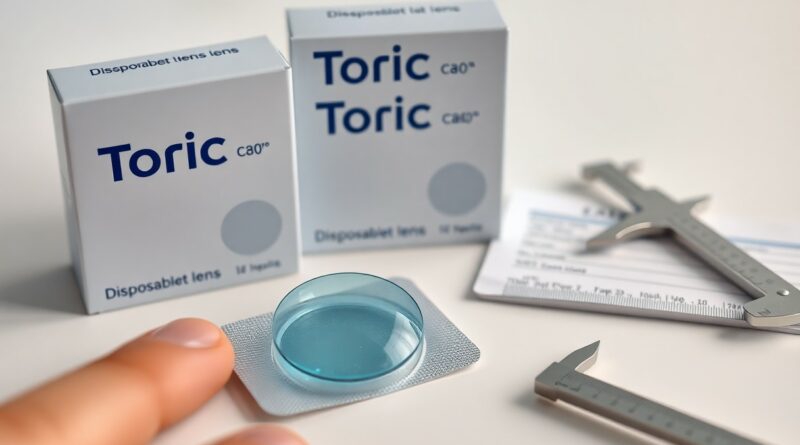
Disposable Contact Lenses for Astigmatism – Top Toric Options (What to Look For)
Contacts designed for astigmatism must correct an irregularly shaped cornea, and toric lenses are specifically engineered for this purpose. Unlike standard lenses, they feature varying refractive powers across different meridians to align with your eye’s unique curvature. You rely on consistent visual clarity, and selecting the right disposable toric option means understanding fit, stability, and material quality from the start.
Key Takeaways:
- Toric contact lenses are specifically designed to correct astigmatism by maintaining a consistent orientation on the eye, using specialized stabilization features that prevent rotation and ensure the corrective power aligns precisely with the eye’s irregular curvature.
- A successful toric lens fit depends on a professional evaluation that accounts for corneal shape, tear film quality, and lifestyle needs, with many wearers achieving optimal comfort and clarity through custom adjustments during the fitting process.
- Replacement schedules vary from daily disposables to bi-weekly or monthly options, allowing users to balance convenience, hygiene, and cost-daily disposables often benefit those with dry eyes or busy routines by reducing lens care demands.
Defining Toric Lenses and How They Work
Toric lenses correct astigmatism through a unique optical design that provides varying refractive powers across different meridians of the lens, aligning precisely with the irregular curvature of your cornea or lens. Unlike spherical lenses, they maintain a stable orientation on the eye to ensure consistent visual correction throughout the day.
The geometry of a toric lens
A toric lens features two distinct curvatures: one steeper curve to correct the flatter meridian of your cornea and a second, flatter curve for the steeper corneal axis. This dual-curve structure creates multiple corrective powers in a single lens, enabling it to address the uneven focus caused by astigmatism.
Differences between standard and toric designs
Standard soft lenses have a uniform spherical shape and power, while toric lenses are engineered with asymmetric thickness and weighted zones to prevent rotation and maintain proper alignment. This distinction ensures your vision remains stable and clear, especially during rapid eye movements.
Manufacturers achieve rotational stability in toric lenses through design adaptations such as prism ballasting or thin-zone stabilization, which gently anchor the lens in place. A mid-sized SaaS firm might prioritize user experience, but in contact lenses, precise orientation directly impacts visual acuity. Even a 10-degree rotation can degrade image quality, making these engineering details imperative for effective correction.

Evaluating Stability Mechanisms for Consistent Vision
Your toric lens must maintain precise alignment to correct astigmatism effectively. Even slight rotation can blur vision, so manufacturers build stabilization features directly into the lens design. Explore All Toric/Astigmatism Contact Lenses to compare options engineered for reliable orientation.
Why orientation matters for astigmatism
Proper lens alignment ensures the corrective power is positioned exactly where your eye needs it. If your toric lens rotates out of place, the astigmatism correction shifts off-axis, leading to distorted or inconsistent vision, especially in low light or during fast eye movements.
Common stabilization technologies in modern disposables
Manufacturers use weighted bottoms and thin-thick zones to keep lenses stable. These designs respond to gravity and eyelid movement, anchoring the lens in the correct orientation. The precision of these systems directly impacts how consistently you see throughout the day.
Weighted-bottom designs add slight mass to the lower edge, helping the lens self-align like a pendulum. Thin-thick zone technology uses variations in lens thickness to interact with the eyelid during blinks, resisting rotation. Some leading disposable brands combine both methods to enhance on-eye stability without sacrificing comfort.
Factors to Consider During the Professional Fitting
Proper alignment of toric lenses depends on accurate assessment of your eye’s unique shape. The fitting process includes measuring the cylinder, which corrects the degree of astigmatism, and the axis, indicating the lens’s orientation on the cornea. Specialized tools map corneal curvature to determine these values with precision. After trying a diagnostic lens, your eye care provider evaluates movement and positioning during blinking to confirm stability.
Understanding cylinder and axis measurements
Your prescription’s cylinder value corrects the uneven curvature causing astigmatism, while the axis specifies the exact angle-measured in degrees from 0 to 180-where the corrective power must align. Even a 10-degree shift in axis can blur vision, so accuracy is imperative. After your eye doctor determines these numbers through refraction and corneal topography, they select a trial lens matching your specifications.
The importance of physical lens-to-eye alignment
Perfect vision with toric lenses depends on consistent rotational alignment on the eye. If the lens rotates off the prescribed axis, visual clarity diminishes immediately. After insertion, your eye care professional uses a slit lamp to verify the lens settles at the correct orientation and maintains position during eye movement.
Minor misalignments can cause persistent blurriness or eye strain, especially during prolonged screen use. Some lenses incorporate precision stabilization zones or weighted designs to resist rotation. Your eye’s tear film quality and lid tension also influence how well the lens stays aligned. After initial wear, follow-up visits help fine-tune the fit based on real-world performance.
How to Select the Right Replacement Schedule
Your replacement schedule should align with both ocular health priorities and daily routines. Daily disposables offer the highest level of hygiene, eliminating the need for cleaning and reducing the risk of infection, while bi-weekly and monthly lenses require consistent care but may be more economical. Frequency of use, comfort, and sensitivity to deposits all influence the best choice for your vision needs.
Daily vs. frequent replacement options
Daily disposable toric lenses provide unmatched convenience and cleanliness, discarded each night without cleaning. In contrast, bi-weekly or monthly lenses demand nightly disinfection and storage, increasing the risk of protein buildup and microbial contamination if not managed properly. Your wearing habits and willingness to maintain lens care shape this decision.
Balancing lifestyle needs and ocular comfort
A busy travel schedule or irregular sleep patterns may make daily disposables the more practical and hygienic option. For those with consistent routines and no sensitivity to lens deposits, a bi-weekly replacement cycle can offer comfort and cost efficiency without compromising eye health when cared for correctly.
Extended wear of monthly lenses requires strict adherence to cleaning protocols and timely replacement, as prolonged use beyond the recommended period raises the likelihood of corneal irritation and infection. A mid-sized SaaS firm employee who frequently works late may find daily disposables reduce morning hassle and enhance comfort, while a teacher with a predictable routine might successfully use bi-weekly toric lenses with proper care. Your individual exposure to environmental irritants, tear film quality, and willingness to follow maintenance steps directly impact long-term ocular comfort and safety.
Summing up
When choosing disposable contact lenses for astigmatism, prioritize lens stability, a precise professional fitting, and a replacement schedule that aligns with your eye health and lifestyle needs. Toric lenses must maintain consistent orientation to correct irregular corneal curvature effectively, making fit and design crucial. You can explore options such as daily or bi-weekly disposables depending on convenience and ocular response. For personalized recommendations on Astigmatism Contact Lenses, consult your eye care provider and consider visiting https://disposablens.com/ for additional insights into disposable toric models.
FAQ
Q: What does “toric” mean in disposable contact lenses for astigmatism?
A: The term “toric” refers to the unique geometric shape of the lens, designed to correct astigmatism by maintaining different refractive powers across the lens surface. Unlike standard spherical lenses that have uniform power, toric lenses feature varying thickness and curvature to align with the irregular shape of the cornea. This design allows light to focus properly on the retina, reducing blurriness and distortion. The toric shape requires precise orientation on the eye, which is why these lenses incorporate stabilization features to prevent rotation during blinking or movement.
Q: How do toric contact lenses stay in place and avoid rotating?
A: Toric lenses use several stabilization mechanisms to maintain proper alignment. One common method is the “ballast” design, where the bottom of the lens is slightly thicker, using gravity and the natural movement of the eyelid to keep the lens oriented correctly. Another approach involves “thin-zone” or “peripheral weighting,” where specific areas of the lens are thinned to reduce resistance during blinking, helping the lens settle into the correct position. Some manufacturers also use prism ballast or double truncation, cutting flat edges at the bottom to enhance stability. A mid-sized SaaS firm specializing in vision simulation software has demonstrated through eye-tracking models that even a 5-degree rotation can significantly degrade visual clarity, underscoring the importance of these features.
Q: Can I wear daily disposable toric lenses if I have a high level of astigmatism?
A: Many daily disposable toric lenses are available for moderate astigmatism, typically up to -2.25 diopters of cylinder correction. For higher levels, options may be more limited in the daily disposable category, though some brands offer bi-weekly or monthly toric lenses with higher correction ranges. It’s common for patients with high astigmatism to require custom or specialty lenses, especially if combined with other vision issues like presbyopia. An eye care professional can perform a detailed refraction and corneal mapping to determine whether off-the-shelf daily disposables are suitable or if a longer replacement cycle or custom design is necessary.
Q: What are the benefits of choosing daily disposable toric lenses over longer-wear options?
A: Daily disposable toric lenses eliminate the need for cleaning and storage, reducing the risk of protein buildup, microbial contamination, and allergic reactions. Because they are discarded after a single use, wearers avoid the cumulative irritation that can occur with repeated use of monthly or bi-weekly lenses. This makes dailies particularly beneficial for people with dry eyes or sensitivities. They also offer convenience for travelers or those with irregular wearing schedules. While the upfront cost per lens is higher, the elimination of solution expenses and reduced risk of complications can make them cost-effective over time.
Q: How often should toric lenses be replaced?
A: Replacement frequency depends on the lens type and individual eye health. Daily disposables are discarded every evening, while bi-weekly and monthly options require strict adherence to cleaning routines and replacement schedules. Wearing a lens beyond its intended lifespan increases the risk of deposits, discomfort, and infection. Some patients with stable prescriptions and healthy tear films may do well with monthly lenses, but those with dryness or allergies often benefit from more frequent replacement. Eye care providers typically assess tear quality, lens adherence, and corneal health during follow-up visits to recommend the optimal replacement interval.
Q: Is it harder to fit toric lenses than regular contact lenses?
A: Fitting toric lenses is more complex due to the need for precise axis alignment and stability assessment. The process usually involves diagnostic lens trials, where the eye care professional evaluates lens movement, rotation, and visual acuity during blinking and eye movement. Adjustments may be needed to the lens diameter, base curve, or brand to achieve optimal fit. Some patients require multiple trial lenses before finding the right match. Digital corneal topography is often used to map the cornea’s surface, ensuring the selected lens aligns with the eye’s unique contours. This level of customization means fitting toric lenses typically takes more time and follow-up than fitting spherical lenses.
Q: Where can I learn more about the best disposable toric lenses for my vision needs?
A: Reliable information about disposable toric lenses, including comparisons of stabilization technologies, wearing schedules, and material options, is available through eye care professionals and educational resources like https://disposablens.com/. This site provides detailed guidance on lens types, fitting considerations, and patient experiences without promoting specific brands, helping individuals make informed decisions alongside their eye doctor.
