How Disposable Contact Lenses Are Made – From Polymer to Packaging
Just imagine how a tiny, precise medical device like a disposable contact lens is born from raw polymer. You’re about to follow its journey through high-precision molding, hydration, and sterile packaging-a process detailed in Shedding Light on a New High-Volume Contact Lens …. Each step ensures optical accuracy and safety, transforming simple materials into lenses worn by millions.
Key Takeaways:
- Disposable contact lenses are primarily made using cast molding, a precision process where liquid monomers are injected into tiny molds and cured with UV light to form thin, consistent lens shapes.
- Most lenses use either hydrogel or silicone hydrogel materials, chosen for their oxygen permeability and comfort, with silicone hydrogels allowing more oxygen to reach the eye for healthier extended wear.
- After molding, lenses undergo rigorous quality checks, are sterilized, and sealed in individual blister packs filled with saline solution to maintain hydration and safety until use.
The Molecular Synthesis of Polymers
You begin with the precise combination of monomers that form hydrogel and silicone hydrogel polymers, the advanced materials defining modern disposable lenses. These polymers are engineered at the molecular level to balance water content, flexibility, and oxygen transmission, ensuring comfort and ocular health throughout wear.
Hydrogel Matrix Characteristics
Hydrogel lenses rely on a water-retaining matrix formed by polymers like poly(2-hydroxyethyl methacrylate) (pHEMA), first developed in the 1960s. Your lens’s comfort stems from its ability to hold up to 40% water, maintaining hydration while resisting protein deposition during daily use.
Silicone Hydrogel Oxygen Permeability
Silicone hydrogel lenses deliver five to six times more oxygen to the cornea than traditional hydrogels, thanks to the integration of silicone molecules. This high oxygen permeability (DK/t) reduces hypoxia risk, allowing safer extended wear, including overnight use in approved designs.
Silicone’s inherent oxygen transmission is harnessed through nanoscale polymer networks that disperse silicone evenly without sacrificing lens wettability. You benefit from materials like lotrafilcon B and balafilcon A, which maintain DK/t values exceeding 100, ensuring corneal health even during prolonged wear. Manufacturers carefully balance silicone content to prevent surface hydrophobicity, often applying plasma surface treatments to enhance comfort. This innovation marks a pivotal advancement in lens safety and performance since their introduction in the late 1990s.
The Mechanics of Cast Molding
Mass production is achieved through cast molding production, where liquid materials are shaped with mathematical precision. You rely on this method for consistent lens quality, as each mold forms optics within microns of target specifications. Learn more about the full journey at How Our Contacts Are Made.
Injection into Optical Molds
Injection into optical molds begins with a precise dose of liquid polymer dispensed into front and back mold halves. You ensure alignment to within a few micrometers, preventing defects. This step determines the lens curvature, directly affecting vision correction accuracy.
Thermal Curing and Solidification
Thermal curing and solidification transform the liquid monomer into a solid hydrogel lens. You apply controlled heat to initiate polymerization, locking the shape permanently. The process takes minutes, but temperature deviations of even 1°C can compromise lens integrity.
During thermal curing and solidification, the molds pass through heated chambers where the polymerization reaction occurs under strict environmental control. You monitor both time and temperature to ensure complete cross-linking of the polymer chains, which determines the lens’s oxygen permeability and mechanical strength. Any inconsistency risks creating weak spots or optical distortions, making this phase one of the most sensitive in the entire manufacturing chain.
Rigorous Quality Control Protocols
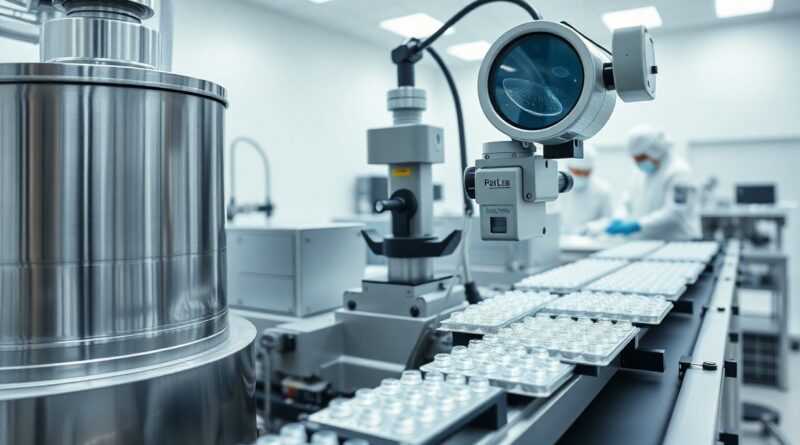
Each lens undergoes strict evaluation before leaving the facility. You rely on flawless vision, and every lens must pass through quality control systems to ensure the absence of structural flaws. Automated systems and human experts work in tandem to detect imperfections invisible to the naked eye, guaranteeing only safe, high-performance lenses reach your eyes.
Automated Optical Inspection
High-resolution cameras scan each lens at multiple angles, detecting microscopic defects. You benefit from 100% inspection coverage, as the system identifies contaminants, tears, or surface irregularities with precision. Any anomaly triggers immediate rejection, ensuring only optically perfect lenses proceed to packaging.
Dimensional Verification Standards
Exact curvature and thickness are confirmed using laser-based measurement tools calibrated to micron-level accuracy. You receive lenses that meet ISO 18369-3:2017 standards, with tolerances as tight as ±0.05mm. This precision guarantees consistent fit, comfort, and visual performance across every batch.
Dimensional accuracy is non-negotiable in disposable lens manufacturing. Your lens’s base curve, diameter, and center thickness are verified against the exact specifications defined during design. Using non-contact laser profilometry, technicians measure each parameter with repeatability up to 0.01mm, ensuring compliance with both internal benchmarks and international regulations like ISO 18369-3:2017. Even slight deviations could compromise comfort or corneal health, making this step one of the most critical safety checkpoints in production.
Methods of Sterilization
Safety is guaranteed through sterilization processes that eliminate all biological contaminants. Each batch of disposable contact lenses undergoes validated sterilization protocols to ensure zero microbial presence before reaching consumers.
Autoclave Heat Application
Autoclave heat application uses saturated steam at 121°C for 15 minutes under 15 psi pressure to destroy all microorganisms. This proven method effectively sterilizes lens packaging materials and equipment, ensuring complete microbial inactivation without compromising lens integrity.
Maintenance of Aseptic Integrity
Maintenance of aseptic integrity begins the moment lenses are sealed in their blister packs. Each pack is formed, filled, and sealed in ISO Class 7 cleanrooms, where airborne particles are continuously monitored to prevent contamination and maintain sterile conditions throughout packaging.
Your lenses remain protected because aseptic integrity relies on continuous environmental controls and automated sealing systems. Every blister pack is hermetically sealed with a medical-grade foil, and the entire process operates under strict FDA and ISO 13485 standards to ensure zero post-sterilization contamination. Any deviation triggers immediate system alerts.
The Blister Packaging System
Your disposable contact lenses rest in a precisely engineered blister pack designed to preserve both hydration and sterility. Each lens is sealed in an individual cavity filled with sterile saline solution, preventing dehydration and contamination until the moment you open it. This packaging system meets strict ISO standards for ophthalmic devices, ensuring safety and performance from factory to wearer.
Saline Solution Immersion
After lens formation, you’ll find each one submerged in a buffered saline solution within the blister pack. This solution maintains the lens’s moisture and shape while inhibiting microbial growth. The saline is filtered to 0.2 microns and contains no preservatives, making it safe for direct ocular use upon insertion.
Hermetic Foil Sealing Techniques
A thin aluminum foil layer is heat-sealed over the blister cavity, creating an airtight, hermetic seal that locks in sterility. This seal prevents any microbial ingress or evaporation over the lens’s shelf life, typically up to three years from manufacture. The foil’s integrity is tested batch-by-batch to meet FDA and ISO 11980 requirements.
Engineered with precision, the hermetic foil sealing process uses controlled temperature and pressure to bond the foil to the plastic blister without compromising the saline environment. Any variation in seal strength-measured in Newtons per millimeter-could risk contamination, so manufacturers conduct peel tests and dye penetration checks on 100% of production lines. This airtight closure ensures your lens remains sterile and hydrated until the moment you peel back the foil yourself.
Summing up
With these considerations, you now understand how disposable contact lenses are crafted through a precise fusion of material science and automated engineering. Starting as raw polymer, the lens material is shaped using advanced molding techniques, undergoes strict quality control, and is packaged in sterile conditions to ensure safety and performance before reaching your eyes.
FAQ
Q: What materials are used to make disposable contact lenses?
A: Disposable contact lenses are primarily made from two types of materials: hydrogel and silicone hydrogel. Hydrogel lenses are composed of water-absorbing polymers like poly-HEMA, which allow oxygen to pass through to the cornea. Silicone hydrogel lenses contain silicone, which significantly increases oxygen permeability, making them more comfortable for extended wear. These materials are chosen for their biocompatibility, flexibility, and ability to retain moisture while maintaining shape on the eye.
Q: How are disposable contact lenses shaped during manufacturing?
A: Most disposable lenses are shaped using a process called cast molding. Liquid monomer-a mixture of raw polymer materials-is injected into precision-molded plastic halves that form the front and back curves of the lens. The molds are sealed and heated or exposed to ultraviolet light to trigger polymerization, turning the liquid into a solid, flexible lens. After curing, the molds are separated, and the lenses are removed for further processing. This method allows for high-volume, consistent production with tight tolerances.
Q: What happens to the lenses after they are molded?
A: Once the lenses are formed, they go through a series of post-processing steps. They are first extracted from the molds and washed in a buffered saline solution to remove any residual monomers or impurities. The lenses are then hydrated to stabilize their water content, which is critical for comfort and optical performance. After hydration, each batch undergoes rigorous quality testing, including checks for diameter, center thickness, power accuracy, and surface smoothness, often using automated imaging systems.
Q: How are disposable contact lenses sterilized and packaged?
A: Lenses are sterilized using a method called terminal sterilization, typically through autoclaving or gamma irradiation, after they are sealed in their final packaging. The packaging consists of blister packs made from medical-grade plastic and foil, each filled with sterile saline solution to keep the lens hydrated and protected. The sealed packs are labeled with lot numbers, expiration dates, and prescription details, ensuring traceability and patient safety. The entire packaging process takes place in a cleanroom environment to prevent contamination.
Q: How do manufacturers ensure every lens meets quality standards?
A: Quality control is built into every stage of production. Automated vision systems inspect each lens for defects like tears, bubbles, or surface irregularities. Random samples from each batch are tested for optical power, oxygen permeability, and mechanical strength. Regulatory agencies like the FDA require manufacturers to follow strict guidelines under Good Manufacturing Practices (GMP). Any batch that fails to meet specifications is rejected, ensuring only safe, high-performance lenses reach consumers.
