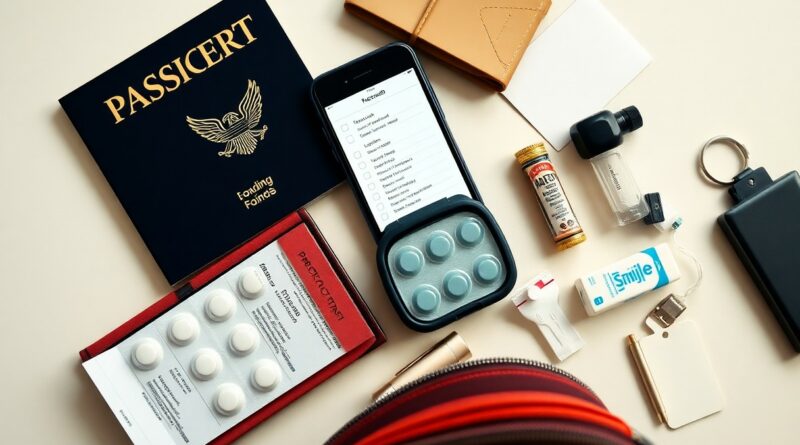
How to Travel Internationally with Disposable Contact Lenses – A Complete Checklist
Checklist your necessarys before flying abroad: carry a copy of your contact lens prescription, pack extra lenses and solution in your carry-on, and know that airplane cabin pressure can dry out your eyes. Never store lenses in tap water-use sterile saline only. Bring your eye doctor’s contact info and a backup pair of glasses. This guide covers everything you need for safe, comfortable vision on international trips.
Key Takeaways:
- Pack TSA-compliant contact lens solution in containers of 100ml or less and place them in a clear, quart-sized bag to pass through airport security without delays.
- Bring extra disposable lenses and a backup pair of glasses to handle unexpected losses, damage, or eye discomfort caused by dry cabin air during long flights.
- Adjust your lens replacement schedule according to your destination’s time zone as soon as you arrive to maintain eye health and avoid wearing lenses longer than recommended.
Essential Packing Factors for Spare Lenses
Always pack extra lenses beyond your trip’s length to account for unexpected delays or loss. Carry at least a 25% surplus-for a 10-day trip, bring 3 additional daily disposables. Store them in their original packaging to prevent damage. Knowing your exact lens prescription and brand ensures quick replacements abroad.
Calculating extra quantities for emergencies
Plan for unforeseen circumstances by adding 2-3 extra days’ worth of lenses to your total supply. If traveling for 14 days, pack 16-17 daily disposables. This buffer protects against lost luggage or accidental disposal. Knowing potential disruptions helps maintain clear vision throughout your journey.
Strategic placement in carry-on vs. checked bags
Keep all contact lens supplies in your carry-on bag to avoid exposure to extreme temperatures in cargo holds. Checked luggage can be delayed or lost, risking your access to lenses. Store cases and solutions in a clear, quart-sized bag per TSA rules. Knowing airline policies safeguards your eye care imperatives.
Placing your lenses and solutions in your carry-on ensures immediate access upon arrival and protects them from pressure changes and temperature extremes in the cargo hold. Delta Airlines and TSA recommend keeping medical items, including lenses, in carry-on luggage. This simple step prevents disruptions to your routine and keeps your eyes comfortable from takeoff to touchdown.
How to Navigate TSA-Friendly Solution Sizes
Traveling with contact lens solution requires strict adherence to TSA’s 3-1-1 liquids rule. You can carry containers of 3.4 ounces (100 milliliters) or less, all fitting in a single quart-sized, clear, resealable plastic bag. Any solution larger than 3.4 ounces must be packed in checked luggage, or it will be confiscated at security.
Adhering to the 3-1-1 liquids rule
Each liquid item, including contact lens solution, must be 3.4 ounces or smaller and placed in a quart-sized, clear plastic bag. You’re limited to one bag per passenger, and all contents must fit comfortably inside without overstuffing. Failure to comply means your solution may be discarded.
Utilizing travel-sized multi-purpose solutions
Brands like Opti-Free, Biotrue, and RevitaLens offer travel-sized solutions in 2-ounce or smaller bottles, perfect for TSA compliance. These compact bottles fit neatly in your quart-sized bag alongside other imperatives and reduce the risk of spills. Always check the label to confirm volume before packing.
Travel-sized multi-purpose solutions are designed for convenience and compliance. A 2-ounce Biotrue bottle, for example, provides enough solution for several days of lens care while staying under the 3.4-ounce TSA limit. Some kits even include a small case and solution in one sealed package, minimizing clutter and maximizing efficiency during security screening.
Tips for Dealing with Dry Cabin Air
Low humidity levels in airplane cabins-often below 20%-can lead to dry eyes and discomfort, especially during long-haul flights. To maintain eye hydration, consider these key steps:
- Use lubricating rewetting drops approved for contact lens wear
- Limit alcohol and caffeine, which worsen dehydration
- Wear eyelid-friendly sleep masks to reduce tear evaporation
- Set a reminder to blink frequently
Any top tips for traveling while wearing contact lenses start with proactive moisture management.
Using lubricating rewetting drops
Carry a travel-sized bottle of preservative-free rewetting drops approved for soft contact lenses. Apply them every few hours during flight to combat dryness caused by low cabin humidity. Avoid using redness-reducing formulas, as they can worsen irritation with prolonged use.
Staying hydrated to support tear film
Drinking water regularly helps maintain your body’s natural tear production. Dehydration reduces tear volume, increasing discomfort for contact lens wearers in dry cabin environments.
Staying hydrated to support tear film means consuming at least 8 ounces of water per hour during long flights. This supports systemic hydration, which directly impacts ocular surface health. Even mild dehydration can reduce tear film stability, leading to gritty sensations and blurred vision. Any consistent intake of water-over sugary or caffeinated drinks-makes a measurable difference in eye comfort.
How to Manage Time-Zone Replacement Scheduling
Stay on track with your lens replacement by aligning your wear schedule to the local time zone as soon as you land. Crossing borders can shift your day by hours, risking extended wear if you’re not careful. Set your watch or phone to destination time mid-flight and use alerts to mark your next lens change. For more guidance on TSA Rules, Flying Dryness, and a Packing List, visit TSA Rules, Flying Dryness, and a Packing List.
Tracking wear duration during transit
Your lenses have a set wear time-usually 14 or 30 days-and flying can distort that timeline. Begin counting wear time from the moment you insert them, not your departure or arrival. Use your phone’s stopwatch to log insertion time and avoid overwearing, which increases infection risk. Time zones won’t reset your lens clock.
Setting alerts for local time adjustments
Adjusting your lens schedule starts the moment you cross time zones. Set a recurring alarm on your phone labeled “Change Lenses” based on local destination time. This simple step prevents accidental overnight wear and keeps your eyes healthy during long trips.
When setting alerts for local time adjustments, sync your device to the destination’s time zone as early as possible-many smartphones do this automatically during international flights. Program reminders based on your lens type: daily, bi-weekly, or monthly wear schedules must match local daylight and sleep cycles. Missing an alert could lead to wearing expired lenses, raising the risk of corneal irritation or infection. Rely on precise timing, not memory.
Emergency Factors: What to Do if You Lose a Lens
Stay calm if you lose a contact lens while traveling. Immediately switch to your backup pair and avoid wearing the remaining single lens to prevent eye strain. Check your spare lenses or use daily disposables if available. Any disruption can be minimized with preparation.
Accessing backup supplies quickly
Keep a sealed pack of your prescription lenses in your carry-on. Store an extra pair in your hotel safe upon arrival. Use manufacturer websites like Acuvue.com or Alcon.com to locate nearby retailers. Any delay in vision correction is avoidable with smart packing.
Navigating local optical services abroad
Carry a copy of your prescription with you at all times. In countries like Japan or Germany, optical shops are regulated and require valid prescriptions for lens sales. Pharmacies in Spain and Mexico may offer over-the-counter solutions, but verify compatibility first. Any replacement lens must match your eye doctor’s specifications exactly.
Optical regulations vary widely across countries, and some nations enforce strict laws on contact lens distribution. In France, only licensed opticians can sell corrective lenses, while Thailand allows limited pharmacy access with a prescription. Always confirm the legitimacy of the provider-look for clinics affiliated with international chains like Specsavers or Optical 88. Any attempt to buy non-prescription lenses risks eye health and long-term vision.
To wrap up
Following this checklist ensures your eyes stay healthy and comfortable during international travel with disposable contact lenses. You pack enough lenses and solution for the trip, keep prescriptions handy, follow TSA liquid rules, and carry backups. You avoid tap water exposure, store lenses properly, and stick to your replacement schedule-even across time zones.
FAQ
Q: Can I bring contact lens solution in my carry-on luggage?
A: Yes, you can bring contact lens solution in your carry-on, but it must follow TSA liquid rules. The container must be 3.4 ounces (100 milliliters) or less and placed in a clear, quart-sized plastic bag with your other liquids. Most travel-sized contact lens solution bottles meet this requirement. Bring only what you need for the flight and the first day, then use locally purchased solution if needed. Never pack full-size bottles in carry-ons unless they’re inside checked luggage.
Q: How many spare contact lenses should I pack for an international trip?
A: Pack at least double the number of lenses you expect to use. If you wear daily disposables, bring enough for each day of the trip plus a full extra week in case of loss, damage, or travel delays. For two-week trips, carry 28 daily lenses. Store them in their original packaging to prevent damage and make customs inspections easier. Keep one set in your carry-on and another in checked luggage in case one bag is lost.
Q: What can I do to prevent my eyes from drying out during a long flight?
A: Airplane cabins have very low humidity, which can dry out contact lenses and cause discomfort. Remove your lenses during the flight if possible and wear prescription glasses instead. If you must wear contacts, use daily disposables and apply rewetting drops approved for contact lens wearers. Blink often and avoid sitting near air vents. Carry a pair of glasses with you just in case. Hydrate by drinking water throughout the flight.
Q: How do I adjust my contact lens replacement schedule when crossing time zones?
A: Stick to the time zone of your destination as soon as you board the plane. Change your lens replacement routine based on local sunrise and sunset, not your home schedule. For daily disposables, insert a fresh pair in the morning after landing. If you’re traveling east and lose a day, don’t reuse a lens to “catch up.” Always use a new lens each day. Set a daily phone reminder at 8 a.m. local time to help stay on track.
Q: What should I do if I lose or tear a contact lens while traveling?
A: Always carry a backup pair of glasses and extra lenses. If you lose a lens, switch to glasses until you can replace it. Many countries sell common brands of daily disposables in pharmacies, but availability varies. Research where to buy your lens type at your destination before you go. Save your prescription on your phone so you can order replacements online or visit a local eye clinic if needed. Never try to reuse a disposable lens, even for a few hours.
