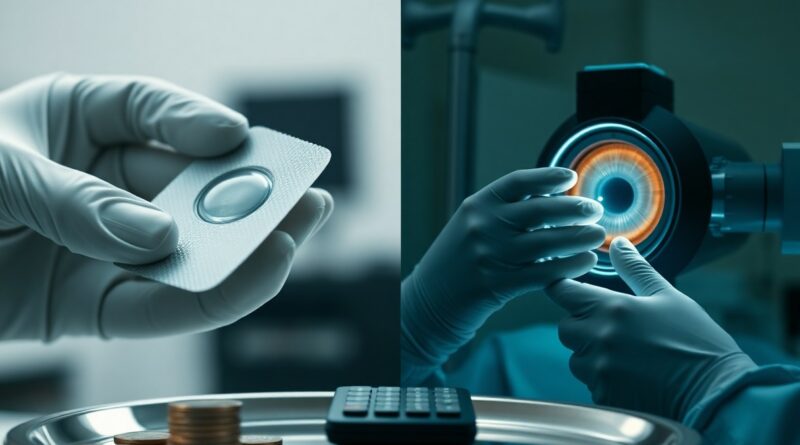
Disposable Contact Lenses vs. LASIK – Which Is the Better Long-Term Investment?
There’s a clear financial and lifestyle trade-off when choosing between disposable contact lenses and LASIK. While contacts may cost $500 to $1,000 per year-adding up to $20,000 or more over 20 years-LASIK averages $2,000 to $4,000 per eye upfront but eliminates ongoing supply costs. You also avoid daily maintenance, dryness, and infection risks linked to long-term lens wear. LASIK offers permanent vision correction, making it a cost-effective, convenient choice over time.
Key Takeaways:
- LASIK often costs more upfront-typically $2,000 to $4,000 for both eyes-but can save money over time by eliminating the need for contact lenses, solutions, and frequent replacements that add up across years.
- Disposable contacts offer daily flexibility and no surgical risk, but require ongoing maintenance, carry a higher chance of eye infections with improper use, and demand consistent spending that can exceed LASIK’s cost within 5 to 10 years.
- Long-term satisfaction depends on lifestyle and eye health; people with stable prescriptions and active routines may benefit most from LASIK’s convenience, while those with changing vision or who prefer non-invasive options may find disposables a better fit.
The Capital Expenditure Comparison
When weighing LASIK against disposable lenses, your financial path splits sharply-one demands a significant upfront payment, the other a steady stream of recurring costs. LASIK vs. Glasses & Contacts: Cost Comparison | Knoxville breaks down how long-term savings can favor surgery. Below is a clear financial comparison:
| Expense Type | Estimated Cost (10 Years) |
|---|---|
| LASIK Surgery (one-time) | $4,000-$5,000 |
| Disposable Lenses + Supplies | $6,000-$8,000 |
Upfront Surgical Capital
LASIK requires you to pay $4,000 to $5,000 out-of-pocket, a steep but one-time cost. Most clinics don’t accept insurance, so you shoulder the full burden immediately. Still, this single investment can eliminate decades of lens purchases and related expenses.
Compounded Cost of Daily Wear
You’ll spend $600 to $800 annually on disposable lenses, solutions, and eye exams. These recurring charges add up relentlessly-reaching over $6,000 in a decade. Unlike LASIK, there’s no finish line, making this a hidden financial drain many underestimate.
Year after year, the cost of disposables accumulates without pause. Even premium daily lenses, priced at $1 per pair, demand $730 yearly for daily use. Add solution, storage cases, and biannual eye exams, and your annual total easily exceeds $800. Over 10 years, that’s thousands more than LASIK, with no end in sight.
Strategic Lifestyle Dividends
You weigh daily trade-offs between convenience and long-term freedom when choosing between disposable contact lenses and LASIK. Your personal habits, from morning routines to weekend activities, directly influence which option delivers greater utility over time. While contacts require ongoing management, LASIK offers a permanent shift in how you experience daily life.
Daily Operational Maintenance
Handling disposable contact lenses means committing to a nightly ritual of removal, cleaning, and storage-slipping up even occasionally increases your risk of corneal infections. You must always carry supplies and avoid water exposure, while LASIK eliminates these demands entirely after a brief recovery period.
Freedom of Movement and Activity
Engaging in sports or travel becomes simpler post-LASIK, as you’re no longer dependent on carrying backups or worrying about lost lenses. Swimmers, hikers, and frequent flyers gain immediate advantages without the constraints of daily lens management.
Without the need to pack solution or fear losing a lens during a workout, your spontaneity increases dramatically after LASIK. You wake up with clear vision-no waiting for lenses to be inserted or dealing with dryness during long flights. Athletes like Olympic swimmer Dara Torres have publicly credited vision correction surgery for maintaining peak performance, proving that freedom from daily dependencies can redefine your physical potential.
Risk Management and Asset Stability
Every vision correction decision hinges on your long-term eye health and visual consistency. You must weigh surgical variables against the steady predictability of disposable lenses. Prescription stability isn’t just recommended-it’s required for LASIK eligibility. Learn more about the long-term implications by reviewing The True Cost of LASIK vs Contact Lenses.
Evaluation of Surgical Risks
Surgery carries inherent risks, including dry eyes, glare, and rare vision disturbances post-LASIK. You may experience temporary fluctuations in visual acuity, and in 1-2% of cases, enhancements are needed. Your corneal thickness, pupil size, and pre-existing conditions directly influence outcomes. These clinical factors demand thorough preoperative screening to minimize complications and support lasting success.
Stability of the Underlying Prescription
Your prescription must remain unchanged for at least 12 consecutive months before qualifying for LASIK. Fluctuating vision indicates ongoing refractive development, increasing the risk of suboptimal correction. Choosing surgery too soon could result in regression, requiring additional procedures or continued lens use, undermining both safety and cost-efficiency in the long run.
Continued instability in your vision-common in individuals under 25 or those with diabetes, hormonal conditions, or prolonged screen use-can compromise LASIK’s effectiveness. Ongoing changes mean the laser correction may only offer a temporary fix, leading to dissatisfaction. Ensuring your prescription has plateaued protects your investment and maximizes the likelihood of a permanent, complication-free result.

Summing up
The LASIK procedure, with an average upfront cost of $2,200 per eye, eliminates decades of recurring expenses for disposable contact lenses, which average $250 to $500 annually. You face minimal maintenance post-surgery, avoid daily hygiene risks, and gain lifestyle freedom. Over 20 years, contact lens users spend $5,000 to $10,000-far exceeding LASIK’s initial price, making surgery the more economical, convenient choice long-term.
FAQ
Q: How do the long-term costs of disposable contact lenses compare to LASIK surgery?
A: Disposable contact lenses require ongoing monthly or weekly purchases, along with solutions, storage cases, and regular eye exams. For someone spending $50 per month on lenses and supplies, that adds up to $600 annually, or $12,000 over 20 years. LASIK surgery typically costs between $2,000 and $4,000 for both eyes upfront, with most patients needing no additional vision correction after healing. While rare touch-up procedures can occur, the majority of LASIK patients remain glasses-free for years. Over time, LASIK often proves less expensive than two decades of disposable lenses.
Q: What are the health risks associated with daily contact lens wear?
A: Wearing disposable lenses every day increases the risk of eye infections, corneal ulcers, and dry eye syndrome, especially if lenses are worn longer than recommended or while sleeping. Poor hygiene, like using tap water to clean cases or not replacing lenses on schedule, raises these risks. LASIK carries its own risks, such as temporary dry eyes, glare at night, or under- or over-correction, but these usually resolve within months. Unlike contacts, LASIK doesn’t require daily handling of the eyes, reducing long-term exposure to infection from touch or contaminated solutions.
Q: How soon after LASIK can someone return to normal activities?
A: Most people notice improved vision within 24 hours of LASIK and can return to work and light activities the next day. Strenuous exercise, swimming, and eye makeup should be avoided for about a week. Patients are advised not to rub their eyes for several weeks. In contrast, contact lens wearers must commit to a daily routine of insertion, removal, and cleaning. LASIK eliminates this routine almost immediately, offering greater convenience for those with active lifestyles or irregular schedules.
Q: Can everyone qualify for LASIK surgery?
A: No. LASIK requires a stable prescription for at least one year, adequate corneal thickness, and healthy eyes. People with severe dry eye, keratoconus, cataracts, or uncontrolled diabetes may not be eligible. Young adults whose vision is still changing often wait until their prescription stabilizes. Contact lenses don’t have these restrictions and can be used by nearly anyone who needs vision correction. For those who don’t qualify for LASIK, disposable lenses remain a practical, flexible option.
Q: Does LASIK last a lifetime, or will I still need glasses later?
A: LASIK corrects current nearsightedness, farsightedness, or astigmatism at the time of surgery, but it doesn’t prevent age-related vision changes. Most patients stay free of glasses for distance vision for decades. However, after age 40, many people develop presbyopia, a natural loss of near focusing ability that requires reading glasses. This occurs regardless of whether someone had LASIK or wore contacts. Some LASIK patients opt for monovision, where one eye is corrected for distance and the other for near tasks, but this isn’t suitable for everyone. Disposable lenses can be adjusted over time to accommodate these shifts without surgical intervention.
