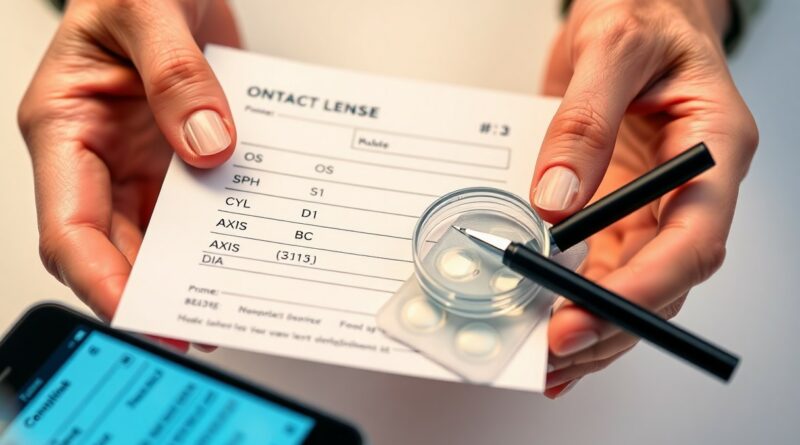
How to Read Your Contact Lens Prescription Like a Pro
Over 75% of contact lens wearers don’t understand their own prescription. Your prescription includes key abbreviations-BC (base curve), DIA (diameter), PWR (power), CYL (cylinder), AXIS, and ADD-that directly impact fit and vision. Reading them correctly ensures comfort and prevents eye damage.
Key Takeaways:
- Understanding abbreviations like BC (base curve), DIA (diameter), and PWR (power) helps you match your eyes’ needs to the right contact lenses-each number is tailored to your eye’s shape and vision correction.
- Contact lens prescriptions include details not found in glasses prescriptions, such as brand, lens material, and wear schedule, because contacts sit directly on the eye and require a more precise fit.
- If you have astigmatism or need reading help, values like CYL, AXIS, and ADD appear for specialized lenses-knowing what these mean ensures you order the right type, whether toric or multifocal.
How to Read Astigmatism and Multifocal Values
CYL and AXIS values correct astigmatism by addressing irregular corneal shape, while ADD indicates the extra magnifying power built into multifocal or bifocal contact lenses for clear near vision-especially important if you’re over 40 and experiencing presbyopia.
Decoding CYL and AXIS for astigmatism
CYL (Cylinder) measures the degree of astigmatism in diopters, typically ranging from -0.25 to -3.00 or higher, while AXIS specifies the lens meridian needing correction, numbered from 1 to 180 degrees-both are necessary for sharp vision if your cornea is irregularly shaped.
Understanding the ADD value for multifocal needs
ADD is the additional power added to the base prescription for near tasks like reading, usually between +0.50 to +3.00 diopters-this value is critical for multifocal or bifocal lenses and ensures clear vision at multiple distances.
Your eye care professional determines the precise ADD based on your age, visual needs, and lens type. This value is always positive and layered over your distance prescription in multifocal designs, enabling you to switch seamlessly between viewing distances-especially beneficial for managing presbyopia without switching glasses.
Comparing Contact Lens vs. Glasses Prescriptions
Contact lens prescriptions differ from glasses prescriptions because lenses sit directly on the eye, requiring different measurements for both physical fit and optical power. While both prescriptions include details like sphere and cylinder values, only contact lens scripts contain base curve, diameter, and brand specifications. You can learn more about interpreting both types by visiting How to Read Your Glasses or Contact Lens Prescription.
| Glasses Prescription | Contact Lens Prescription |
|---|---|
| Sphere (SPH) | Sphere (SPH) |
| Cylinder (CYL) | Cylinder (CYL) |
| Axis | Axis |
| Pupillary Distance (PD) | Base Curve (BC) |
| Diameter (DIA) | |
| Brand/Manufacturer |
Why distance from the eye changes your prescription
Your glasses sit about 12 millimeters from your eye, while contact lenses rest directly on the cornea. This difference in distance alters how corrective power is applied, meaning your contact lens prescription may have a slightly different strength, especially if you have a higher than ±4.00 diopter correction. The vertex distance adjustment ensures clarity and comfort.
The necessity of distinct measurements for different eyewear
Contacts require precise fitting to match your eye’s shape, which is why your prescription includes base curve and diameter. These values ensure the lens fits securely and comfortably on your cornea. Without them, you risk irritation, poor vision, or even corneal damage. Never use a glasses prescription to order contacts.
Unlike glasses, contact lenses interact directly with your eye’s surface, making physical fit as important as optical correction. Measurements like base curve and diameter are determined during a contact lens fitting exam, ensuring the lens moves properly with each blink and allows adequate oxygen flow. These parameters are unique to contact wear and are not part of a glasses prescription because frames don’t touch the eye.
Tips for Ordering Your Lenses Online Confidently
Knowing your OD, OS, BC, PWR, and DIA values means you can skip guesswork when buying lenses. Retailers require exact figures to match your vision needs.
- Always cross-check your prescription date
- Confirm lens brand and pack size
- Verify expiration date of prescription
Any error could lead to discomfort or eye health risks.
Verifying your prescription details before purchase
You must confirm the prescription is current-most expire after one year. Check the OD and OS values match your eyes, and ensure the BC and DIA align with your previous lenses. Any mismatch may result in poor fit or vision issues.
Navigating online retailer interfaces with your data
Most sites organize fields using standard abbreviations like PWR, BC, and DIA. Enter each value exactly as written-retailer drop-downs often limit choices to common specs. Any deviation from your prescription can disqualify the fit.
When entering data on sites like VisionDirect or Lens.com, you’ll notice input fields labeled with terms you now understand. The BC (typically 8.3 to 8.8) and DIA (often 14.0mm) must match your prescription exactly. Retailers flag mismatches, but only if you review before checkout.
Summing up
Conclusively, you now know how to interpret your contact lens prescription with confidence. Recognizing abbreviations like OD, OS, and OU, along with parameters such as base curve and diameter, empowers you to verify accuracy. Mastering these abbreviations and understanding the unique requirements of contact lenses ensures you receive the correct vision correction when purchasing your lenses.
FAQ
Q: What do BC and DIA mean on my contact lens prescription?
A: BC stands for base curve, which measures the curvature of the back surface of your contact lens. It’s usually a number between 8.0 and 9.0 mm and ensures the lens fits snugly on your eye. DIA means diameter, indicating the width of the lens from edge to edge, typically ranging from 13.0 to 15.0 mm. Together, BC and DIA determine how well the lens sits on your cornea. If either measurement is off, the lens might feel uncomfortable, move too much, or even dislodge.
Q: How is PWR different from my glasses prescription?
A: PWR, or power, refers to the lens strength needed to correct your vision. It’s measured in diopters and can be negative (for nearsightedness) or positive (for farsightedness). While the PWR on your contact lens prescription may look similar to your glasses prescription, it’s often slightly different because contacts sit directly on the eye, unlike glasses, which sit about 12 mm away. Your eye doctor adjusts the power to account for this difference, so using your glasses prescription for contacts can lead to blurry vision or eye strain.
Q: What do CYL and AXIS mean if I have astigmatism?
A: CYL stands for cylinder and indicates the amount of lens power needed to correct astigmatism, which is an irregularly shaped cornea. This number is always accompanied by an AXIS value, which is a number between 1 and 180 degrees and shows the orientation of the astigmatism. Together, these values ensure the contact lens is aligned correctly on your eye. Not all contact lenses correct astigmatism-only toric lenses include CYL and AXIS, so make sure you’re ordering the right type if these values appear on your prescription.
Q: What does ADD mean on my contact lens prescription?
A: ADD stands for addition and refers to the extra magnifying power built into multifocal contact lenses. It’s used to correct presbyopia, a condition that affects near vision as people age. The ADD value is always a positive number, typically between +0.75 and +3.00, and is added to the distance prescription to help you see clearly up close. If your prescription includes ADD, you need multifocal or bifocal contact lenses, not standard ones. Both eyes may have the same ADD value, even if their distance powers differ.
Q: Why can’t I use my glasses prescription to order contact lenses?
A: Glasses and contact lenses sit at different distances from your eye, so their prescriptions aren’t interchangeable. Contact lenses require specific measurements like BC, DIA, and sometimes brand specifications because they must fit precisely on the cornea. A glasses prescription doesn’t include these details. Also, the lens power is often adjusted for contacts due to their proximity to the eye. Using a glasses prescription to order contacts can result in discomfort, poor vision, or even corneal damage. Always use a valid, up-to-date contact lens prescription from your eye care provider.
