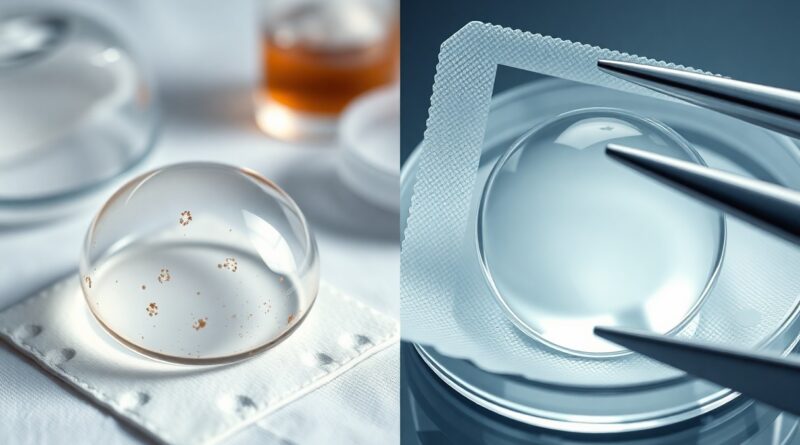
Why Reusable Lenses Trap What Disposable Lenses Eliminate
Most reusable lenses gradually accumulate tear proteins, lipids and microbes that you can’t fully remove with cleaning, so they trap bacteria and debris against your eye and raise the infection and irritation risk. You lower that risk by using daily disposables, which provide a fresh, contaminant‑free surface each wear; for practical comparisons, see Daily disposables vs reusable contacts when traveling.
With reusable lenses, deposits and microbial biofilms accumulate on the surface and in microabrasions of the lens matrix, so your lenses can trap harmful bacteria, allergens, and protein build-up, increasing irritation and infection risk; by contrast, single-use disposables eliminate overnight buildup and lower contamination risk, reducing inflammation and making hygiene simpler for you.

Key Takeaways:
- Reusable lenses accumulate proteins, lipids and biofilm that trap allergens and microbes; deposits increase friction and inflammation even with cleaning.
- Daily disposables start sterile and discard buildup each wear, reducing microbial load, solution exposure and handling-related contamination that drive irritation.
- Lens material and cleaning compliance affect deposit formation; single‑use wear minimizes variability from material chemistry and user care, producing more consistent comfort.
Key Takeaways:
- Reusable lenses accumulate proteins, lipids and environmental debris that form deposits and biofilms resistant to cleaning; daily disposables eliminate that buildup by discarding the lens after each wear, reducing irritation and infection risk.
- Cases, cleaning solutions and repeated handling introduce and trap microbes and change lens surface chemistry; single‑use lenses remove case/solution exposure and lower the chance of contaminant transfer to the eye.
- Deposit‑laden and surface‑worn reusable lenses increase friction and provoke inflammatory or allergic responses; using a fresh lens each wear minimizes mechanical irritation and reactive symptoms.
Lens materials and surface chemistry
Your lens material determines what sticks: conventional hydrogels with high water (often 38-79%) soak up tear proteins and bacteria more readily, while daily disposables remove that buildup before it becomes a problem – see Daily Disposable Contact Lenses – Penndel. Clinical comparisons show daily disposables lower deposit load, corneal staining, and irritation versus reused lenses, cutting cumulative exposure to denatured proteins and microbes.
Soft hydrogels: water content and protein affinity
You’ll notice soft hydrogels with higher water content bind more tear proteins-especially lysozyme on ionic polymers-so deposits accumulate within days. That buildup can alter optics and trigger inflammation, and multipurpose solutions often leave residuals that don’t remove tightly bound proteins. In practice, lenses >50% water and ionic chemistry mean faster deposit-related discomfort and more frequent lens replacement or aggressive cleaning.
Silicone hydrogels and RGP: oxygen, wettability, and deposit patterns
You benefit from silicone hydrogels’ high oxygen transmissibility (Dk/t often >60-100), which protects corneal physiology, but their hydrophobic silicone domains attract lipids, reducing wettability and comfort over wear sessions. RGPs resist protein films differently-fewer deposits overall, yet particulate and microbial contaminants can become trapped under edges. High oxygen materials trade lower deposit affinity for increased lipid-related discomfort.
Surface treatments and wetting agents change the balance: many silicone hydrogels use plasma or grafted hydrophilic layers to restore wettability and limit lipid adhesion, while RGPs rely on routine mechanical cleaning to remove focal deposits. You should weigh numbers-hydrogel Dk/t commonly <20 versus silicone hydrogel >60-and behaviors: hydrogels pick up proteins, silicone attracts lipids, and RGPs shift deposit location; each pattern affects inflammation and infection risk if lenses are reused.
Lens materials and surface properties
Different lens chemistries change how deposits form: conventional hydrogel materials bind tear proteins more readily while silicone hydrogels attract lipids, and daily disposables remove that buildup by being discarded after one wear. If your eyes are easily irritated, single‑use lenses cut out the cumulative deposit layer that fuels redness and discomfort. For a direct comparison of replacement schedules and risks, see Are Disposable or Reusable Contacts Better?
Hydrophobic vs hydrophilic interactions with deposits
Hydrophobic surfaces (typical of untreated silicone hydrogel) preferentially attract lipid components of the tear film, causing rapid fogging and comfort loss within 24-48 hours for many wearers; hydrophilic hydrogels bind proteins that stiffen the surface and trap microbes. If you have oily skin or use emulsifying cosmetics, expect faster lipid fouling on hydrophobic lenses and more cleaning challenges with reusable options.
Surface treatments and how durability differs between reusable and disposable lenses
Manufacturers add plasma or polymeric wetting layers to improve wettability and resist deposits, but those coatings must be durable to survive multipurpose solutions and handling; disposables avoid the durability issue by not needing long‑lived coatings. You should know that reusable lens coatings degrade over time, which raises deposit adhesion and comfort problems as replacement intervals lengthen.
Plasma treatments, surface‑bound PVP and hyaluronic‑acid-infused wetting agents are common: plasma provides a thin hydrophilic shell, while PVP creates a sustained lubricating layer. Repeated rubbing, exposure to surfactants in cleaners, and mechanical abrasion from handling can reduce surface wettability in as little as 2-4 weeks on reusable lenses, increasing protein and lipid staining; manufacturers design monthly lenses to tolerate that timeline, but extending wear or using harsh cleaners accelerates failure. If you push reusable lenses beyond their intended schedule, you directly increase deposit buildup, compromise optics, and raise your infection and inflammation risk.
Contaminant types and adhesion mechanisms
You encounter deposits from tears, skin oils, and microbes that interact differently with lens materials: proteins denature and stick to hydrophilic surfaces, lipids adhere to hydrophobic silicone hydrogels, and microbes exploit those deposits to attach and form biofilm within 24-72 hours; studies link lens-case contamination in ~30-80% of users to higher infection risk, while daily disposable wear limits surface dwell time and dramatically lowers cumulative deposit load.
- Proteins
- Lipids
- Mucins
- Bacteria/Fungi
- Protozoa (Acanthamoeba)
| Tear proteins | Denature on hydrogels, increase friction and haze; deposits accumulate within hours and are harder to remove from reusable lenses. |
| Lipids | Preferentially coat silicone hydrogel surfaces, reducing wettability and creating hydrophobic patches that trap microbes. |
| Mucins | Form sticky films that alter tear-film stability and provide scaffolding for bacterial adhesion. |
| Bacteria & Fungi | Use adhesins and pili to attach; can form EPS biofilms in 24-72 hours, increasing antimicrobial tolerance up to 1,000×. |
| Protozoa (Acanthamoeba) | Associate with deposits and lens cases, survive some disinfectants, and are linked to severe keratitis-risk reduced by single‑use lenses. |
Tear components: proteins, lipids, mucins
You should expect lysozyme and other proteins to precipitate on lens surfaces within hours, while tear lipids create oily films that change wettability; mucins form a sticky matrix that traps debris and microbes, so reusable lenses accumulate layered deposits that increase friction and ocular irritation compared with daily disposable lenses that avoid multi‑day buildup.
Microorganisms: adhesion, colonization, and biofilm formation
You face opportunistic pathogens like Pseudomonas and fungi that adhere via adhesins, multiply, and produce extracellular polymeric substances to form biofilms within 24-72 hours, making them far more tolerant to multipurpose solutions; contaminated lens cases and overnight wear are common drivers of colonization.
Thou should note that when you allow lenses to accumulate deposits or store them in cases, Pseudomonas aeruginosa can reach >10^6 CFU on surfaces within 24-48 hours and biofilms then resist disinfection by factors of 10-1,000; outbreak analyses repeatedly link improper case hygiene and extended wear to most culture‑positive keratitis events, so by eliminating repeated surface exposure with daily disposable lenses you reduce microbial load and remove the substrate microbes exploit for adhesion and persistence.
Deposit formation mechanisms
Deposits form when your tear-film components and environmental particles adsorb to lens polymers within hours, then accumulate over days; reusable lenses let that burden grow across weeks, while daily disposables interrupt the cycle by discarding built-up material each wear. Hydrogel (HEMA) materials preferentially attract tear proteins, silicone hydrogels attract lipids, and that material-specific affinity explains why your choice of lens directly alters the type and rate of buildup and resulting irritation.
Tear-film components: proteins, lipids and mucins
Your tears contain abundant proteins (lysozyme, lactoferrin, lipocalin), meibomian lipids (wax and cholesterol esters) and mucins (MUC5AC) that adsorb to lens surfaces; hydrophilic HEMA lenses bind proteins more readily, while silicone hydrogel attracts lipid deposits. Deposits can denature within hours, lowering wettability and triggering inflammatory cells-so if you reuse lenses, you let these altered biomolecules persist and increase your risk of discomfort and contact-lens induced papillary changes.
Environmental contaminants: microbes, cosmetics and allergens
Microbes such as Pseudomonas and Staphylococcus, cosmetic oils from mascara and foundation, plus airborne pollen and dust, latch onto existing tear-film deposits to form mixed biofilms on reused lenses; daily disposables remove that day’s contaminants, markedly reducing the scaffold that fosters microbial adhesion and allergen retention. Your handling and storage further determine how much environmental load accumulates between wears.
For example, cosmetic oils spread across lens surfaces and accelerate lipid enrichment, making lenses stickier and harder to clean; microbes exploit those oily, protein-rich niches-Pseudomonas is a leading cause of contact-lens associated microbial keratitis, which can be sight-threatening. By replacing lenses every day you remove both the biological substrate and any transferred cosmetics or pollen, substantially lowering biofilm formation and acute irritation incidents compared with monthly reuse.
Why reusable lenses trap contaminants
Because reusable lenses remain in contact with your tear film and environment for days to weeks, they accumulate tear proteins, lipids, cosmetics and microbes that single‑use lenses shed daily. Deposits begin forming within 24-48 hours, altering wettability and surface roughness and increasing friction against your epithelium. When you skip replacement or cleaning lapses occur, that buildup becomes a persistent source of irritation, inflammation and microbial adhesion that single‑use lenses largely eliminate by starting fresh each day.
Surface adsorption, matrix entrapment, and wear‑induced changes
Hydrogel materials preferentially adsorb tear proteins like lysozyme and albumin, while silicone hydrogels attract lipids from the meibomian layer; over time, some molecules migrate into the polymer matrix where cleaning solutions cannot fully reach. As you wear lenses, surface wettability and oxygen transfer can decline and micro‑roughness increases, which in turn promotes further adsorption and higher friction-factors that raise your risk of contact lens‑related discomfort and epithelial compromise.
Edge deposits, microabrasions, and tear film interactions
Deposit buildup concentrates at the lens edge and inner rim where tear flow and cleaning access are poorest, creating a mechanical hotspot during each blink. Those edge deposits act as a scaffold for biofilms and trap microbes such as Pseudomonas, so when your edge meets the cornea repeatedly it magnifies local inflammation and infection risk; edge biofilms are a known nidus for recurrent infiltrative events.
Repeated blinking (about 12-20 blinks per minute) applies cyclical shear to the lens edge, producing micron‑scale abrasions that disrupt epithelial cells and expose adhesion sites for bacteria. You amplify that damage by overwearing lenses or using imperfect cleaning regimens; cases seeded from contaminated cases often show heavy edge fouling. Choosing daily disposables removes that accumulated edge burden every day, reducing your exposure to biofilm formation, microabrasions, and attendant infection risk.
Cleaning and storage: why reusables retain contaminants
When you store reusable lenses in a case, residues from tears, makeup and environment accumulate and form deposits that standard care often fails to remove. Studies report lens case contamination in 40-60% of samples, and reused lenses trap proteins and microbes between wearings, increasing your irritation and infection risk. By contrast, daily disposables remove the storage step, cutting your exposure to Pseudomonas and Acanthamoeba reservoirs that thrive in moist cases.
Limits of multipurpose solutions and mechanical cleaning
Even if you follow directions, up to 90% of wearers deviate from ideal cleaning, so multipurpose solutions and rubbing often fail in practice. Multipurpose cleaners address free-floating bacteria but have limited impact on established biofilm and Acanthamoeba cysts, while mechanical rubbing depends heavily on technique and contact time. Clinical and lab comparisons show hydrogen‑peroxide systems outperform many multipurpose formulas, but the simplest way to reduce risk for most users is eliminating the case and storage cycle with daily disposables.
Biofilm formation on lens cases and lens surfaces
Biofilms can establish in your lens case and on reusable lens surfaces within 24-48 hours, embedding bacteria and amoebae in a protective matrix that resists routine cleaning. Soft silicone‑hydrogel lenses attract lipids and proteins that fuel biofilm growth, while rigid materials show different adherence patterns; once the matrix forms it shields microbes from multipurpose solutions and elevates your risk of irritation and keratitis. Daily disposables remove the surface biofilms need to mature each day.
Outbreak investigations have repeatedly linked Acanthamoeba keratitis and Pseudomonas infections to cases rinsed with tap water or to users who “top off” solution; you raise risk by reusing solution or skipping rub‑and‑rinse steps. Biofilm communities tolerate drying and reduce disinfectant penetration, so enzymatic cleaners and hydrogen‑peroxide regimens penetrate matrix layers better than many multipurpose products. To lower your risk, replace the case every 1-3 months, avoid tap water contact, and consider daily disposables to remove the substrate biofilms rely on.
Limits of cleaning and disinfection
Even when you follow a perfect care regimen, deposits and microbes persist: multipurpose solutions (MPS) typically yield about a 3‑log reduction in planktonic organisms while hydrogen‑peroxide systems can reach near 6‑log kill; nonetheless, organic films and case contamination (reported in up to ~50% of users) let microbes and deposits re‑establish between uses, so reusable lenses keep accumulating agents that increase irritation and infection risk over time.
Mechanical removal vs irreversible adsorption
You can improve surface cleanliness by rubbing and using enzymatic cleaners, which remove most loose debris and denatured protein, but many deposits become irreversibly adsorbed into lens polymers; for example, silicone‑hydrogels preferentially attract lipids while ionic hydrogels bind proteins, so mechanical cleaning often fails to reverse material‑bound changes in wettability and comfort that accumulate week by week.
Biofilm resistance and care‑solution efficacy
Bacteria embedded in biofilms on lenses or cases can be 100-1,000× more tolerant to disinfectants than free cells, so MPS that perform well against planktonic microbes may leave viable biofilm communities; you should note that storage cases and poorly rinsed lenses are common biofilm niches, meaning routine cleaning alone may not prevent pathogenesis or chronic irritation.
Biofilms are dominated by organisms like Pseudomonas aeruginosa and Staphylococcus epidermidis, which adhere to deposits and to lens materials; you see reduced disinfectant penetration because extracellular polymeric substances sequester agents and neutralize oxidizers, and organic loading from tear lipids/proteins accelerates biofilm maturation-so even high‑performing systems require correct dwell time and case hygiene, whereas daily disposable lenses interrupt this cycle by delivering a sterile surface every day.
Design and replacement-schedule advantages of disposables
You benefit from scheduled replacement: daily disposables are removed after 1 day, while biweekly and monthly lenses stay in use for 14 or 30 days. That translates to far fewer cleaning cycles, less time in storage cases and a steady reduction in handling-related contamination. By cutting the window for deposit build-up and biofilm maturation, disposables lower your exposure to deposit-related irritation and handling errors that drive many contact-lens complications.
Fresh-surface effect and minimized accumulation
You get a truly fresh surface with single‑use lenses, which prevents the progressive adsorption of tear proteins, lipids and environmental contaminants that begin to alter surface chemistry within 24-48 hours. Daily replacement removes nascent deposits before they thicken into adherent layers or biofilms, reducing the need for enzymatic cleaners and lowering the likelihood of microbial adhesion and inflammatory responses from residual build-up.
Short-term wear reducing material fatigue and uptake of deposits
You avoid repeated mechanical and chemical stress by discarding lenses after short wear periods; a monthly lens endures dozens of rubs, rinses and solution exposures over 30 days, which increases surface roughness and creates new binding sites for deposits. That cumulative wear raises your risk of discomfort, reduced wettability and greater bacterial retention compared with lenses replaced every day.
You should note material-specific effects: silicone‑hydrogel materials, because of higher hydrophobicity, tend to attract lipids more readily than conventional hydrogels, and repeated cleaning can alter wettability and ionic balance on the surface. A reused monthly lens may experience 30-60 handling cycles (clean, store, reinsert), each introducing micro‑abrasions and residual chemicals that amplify deposit uptake and bacterial colonization. Disposables eliminate these cycles, dramatically reducing your cumulative surface degradation and bioburden.
How single‑use (daily disposable) lenses reduce irritation risk
Eliminating cumulative deposits and biofilms
You avoid the progressive buildup of protein, lipid and environmental deposits that reusable lenses accumulate over days to weeks; studies show microbial biofilms can begin forming in 24-48 hours, trapping bacteria and protecting them from cleaners. That buildup increases lens friction, reduces wettability and lowers oxygen transmissibility, so by discarding lenses daily you remove the substrate that causes chronic irritation and sterile inflammatory events.
Reducing handling, storage contamination, and solution exposure
By using a fresh lens each day you eliminate the need for a lens case and disinfecting solutions-common contamination sources with reported case contamination rates of up to 50-80%. You also cut down on repeated fingertip contact and risky behaviors like topping off solution, so your exposure to bacteria, fungi and Acanthamoeba from cases, tap water or reused solution is greatly reduced.
Surveys indicate up to 90% of wearers admit at least one care lapse (topping off solution, infrequent case replacement, or rinsing in tap water), behaviors linked in case studies to Acanthamoeba and bacterial keratitis outbreaks. Switching to daily disposables removes the lens‑care steps where those lapses occur, so even if your routine is imperfect you substantially lower the chance that handling or storage contamination will provoke an irritation or infection.
Clinical implications and irritation risk
Your reusable lenses concentrate deposits, allergens and biofilms in the lens matrix and case, driving higher rates of mechanical and inflammatory problems; biofilm can begin forming within 24-48 hours, and reusable wear is associated with roughly 2-4× greater rates of corneal infiltrative events and infection compared with daily disposables, so switching to single‑use lenses often reduces episodes, improves comfort and lowers treatment needs.
Inflammatory, allergic and mechanical irritation pathways
You’ll get increased friction and epithelial disturbance as proteins, lipids and denatured deposits accumulate on reusable lenses, raising inflammatory cytokines and allergy sensitization; higher‑modulus reusable silicone hydrogels can exacerbate microtrauma, cleaning failures leave residual antigenic material, and some cohorts report up to a 50% reduction in symptomatic inflammatory events after switching to daily disposables.
Infection risk and supporting epidemiological data
If you use reusables, pathogens such as Pseudomonas and Acanthamoeba colonize cases and biofilms more readily, particularly after water exposure; population studies estimate microbial keratitis at ~2-4 per 10,000 person‑years for daily‑wear soft lenses versus up to ~20-30 per 10,000 with overnight wear, and multiple analyses show lower infection rates with single‑use lenses.
Case‑control and registry analyses (including cohorts thousands‑strong) report odds ratios for microbial keratitis with daily disposables versus reusables around 0.3-0.6, translating to a 40-70% lower risk in many analyses; noncompliance is common-surveys show >50% of reusable wearers skip recommended disinfection steps-so when you eliminate the lens case and use daily lenses, you remove a major reservoir and substantially lower the population infection burden.

Clinical and practical recommendations
Indications favoring disposables (sensitivity, allergy, recurrent irritation)
You should choose daily disposables if you have seasonal allergies, contact lens-associated papillary conjunctivitis, frequent mucus buildup or recurrent irritation; studies report roughly 30-50% lower rates of corneal inflammatory events with dailies versus monthlies. Single‑use lenses prevent protein and lipid accumulation and avoid biofilm formation on polymers, so you’ll cut exposure to trapped allergens and microbes, reducing red eye, itch, and steroid prescriptions in many cases.
Best practices for reusable lens wearers who cannot switch
If you must wear reusables, adopt a strict regimen: rub‑and‑rinse for at least 10 seconds each surface, use multi‑purpose or hydrogen peroxide systems as directed, never top‑up solution, and replace your case every 90 days. Avoid tap water and swimming with lenses; overnight wear raises infection risk ~6-8×. Document symptoms and see your practitioner at first sign of pain, reduced vision, or persistent redness.
Focus on measurable steps: clean for 10-15 seconds with surfactant rubbing, soak for the manufacturer’s minimum-typically 4-6 hours for disinfection-use enzymatic cleaner weekly to remove protein, and consider a 3% hydrogen peroxide system for stubborn deposits but follow neutralization instructions. Replace lenses per schedule, and if you have daily discomfort, switching to daily disposables usually eliminates accumulated deposits within 24-48 hours.
Patient behavior and compliance factors
You often underestimate how your habits interact with lens material: reusable lenses accumulate deposits and biofilm in micro-abrasions, while disposable lenses remove that daily source of irritation; surveys report 30-50% of patients miss cleaning or replacement schedules. If you skip nightly care or “top off” solution, contamination and symptoms rise quickly. For a practical comparison see The Pros And Cons Of Daily Disposable Lenses. Perceiving daily disposables as simpler boosts your adherence and reduces contaminant-related irritation.
- Replacement schedule: extending intervals increases protein and bacterial buildup.
- Handwashing: failing to wash raises lipid and microbial transfer every time you handle lenses.
- Solution use: “topping off” and using expired solution multiply contamination risk.
Handling, hygiene and common care errors
When you handle lenses with damp or unwashed hands you transfer oils and microbes that adhere to lens surfaces; one study showed ~2.5× higher microbial counts with poor handling. Topping off solution instead of discarding it encourages biofilm growth, and rinsing or storing lenses in tap water exposes you to waterborne pathogens. If you sleep in lenses meant for daily wear or skip monthly replacement, deposits and inflammation accumulate and symptoms escalate.
Cost, convenience and how adherence influences outcomes
If you wear dailies at about $1.00-$1.50 per lens, 60 lenses/month equals roughly $60-$90/month; a monthly pair at $25-$40 plus solution (~$10/month) runs about $35-$50/month. Lower adherence with reusables-skipped cleaning or extended replacement-accounts for up to 50% of contact-lens complications, so your actual long‑term cost and risk depend on how reliably you follow care routines.
Calculating real costs shows tradeoffs: switching to daily disposables might raise your annual spend to about $720-$1,080 versus roughly $420-$600 for monthly lenses plus solution, but avoidable clinic visits from infections (often costing $150-$600 per episode) can erase that savings if your adherence is poor. If you work in healthcare or dusty environments and handle lenses frequently, the time saved by eliminating nightly care and the reduced risk of contaminant-related inflammation often justify the higher per-lens price; conversely, if you reliably follow cleaning, reusables remain economical but demand consistent, correct steps every day.
Summing up
Conclusively you face higher irritation risk with reusable lenses because protein, lipids, microbes and environmental debris accumulate and form biofilms on their surfaces and edges, which cleaning often cannot fully remove; by contrast daily disposables are discarded before deposits build up, lowering pathogen and allergen exposure and simplifying hygiene. For a practical option, see Daily Disposable Contact Lenses – Penndel.
To wrap up
Now you see that reusable lenses accumulate protein, lipid, and microbial debris in microabrasions and on pore-like surfaces, creating reservoirs that persist between wears; disposables avoid that by providing a sterile barrier each wear and minimizing biofilm formation, so your eyelids and tear film face fewer irritants and lower infection risk. Choosing daily disposables reduces buildup, preserves comfort, and simplifies hygiene.
FAQ
Q: Why do reusable contact lenses trap deposits while disposable lenses do not?
A: Reusable lenses are worn repeatedly, so tear proteins, lipids, mucins and environmental particles build up on their surfaces and within microscopic surface irregularities. Soft reusable materials can absorb tear components that denature and adhere, and roughened or worn edges increase mechanical retention. Over time those deposits encourage microbial adherence and biofilm formation that resist routine cleaning. Daily disposables are discarded after a single wear, preventing the progressive accumulation and biofilm development that cause most deposit-related problems.
Q: How do trapped contaminants on reusable lenses cause irritation, redness or infection?
A: Deposits increase friction between the lens and the eyelid or cornea, producing microtrauma and inflammation that show as discomfort and redness. Denatured proteins and bound lipids can trigger allergic or toxic responses, and deposit-embedded microbes are harder to eliminate with disinfection, raising the risk of microbial keratitis. Inadequate oxygen transfer through deposit-clogged surfaces and compromised tear exchange further impair corneal health and delay recovery from minor injuries.
Q: If daily disposables reduce these risks, when are reusable lenses appropriate and what precautions should users take?
A: Reusable lenses remain appropriate for specialized prescriptions, certain toric or multifocal designs, or when replacement schedules and cost/waste factors dictate. When using reusables, follow strict hygiene: wash and dry hands before handling, rub and rinse lenses with the recommended solution, use case care and timely case replacement, adhere to the prescribed wearing and replacement schedule, and avoid overnight wear unless explicitly approved. Seek prompt professional care for persistent discomfort, redness, discharge or vision changes.
