
Eye Irritation and Contact Lenses – What Your Water Quality Has to Do With It
lenses can trap minerals and microbes from your tap, so local water quality directly influences comfort and infection risk; contaminated tap water can introduce Acanthamoeba and other pathogens that cause severe eye infections. To protect your eyes, wash your hands with soap and dry them before handling lenses and use sterile contact solution and never rinse lenses with tap water, which reduces irritation and improves comfort.
Key Takeaways:
- Local water quality affects lens comfort because minerals, chlorine and microbes in tap or well water can deposit on lenses or introduce infection; never rinse or store contacts in tap water and avoid showering or swimming while wearing them.
- Proper hand hygiene-wash with soap, rinse well and dry with a lint‑free towel-prevents transfer of oils, residues and microbes that cause irritation and infections when handling lenses.
- Improve comfort by using manufacturer‑recommended disinfecting solution, switching to daily disposables if water quality or residue is a problem, and checking local water reports or your eye care professional if irritation persists.
How water quality affects contact lenses
Hardness, disinfectant levels, and local plumbing all change how comfortable your lenses feel. Hard water (classified as >120 mg/L CaCO3) speeds mineral buildup; low residual chlorine can let microbes persist in pipes; and softer water with high organic load can increase protein deposits from your tear film. Combining proper hand hygiene and avoiding tap-water rinsing links directly to fewer irritations, clearer lenses, and better overall lens comfort in your daily wear routine.
Mineral deposits, protein buildup, and lens surface changes
Calcium and magnesium from hard water bind to lenses within days, creating visible spots, reduced wettability, and scratch-prone surfaces. Protein from tears then adheres more readily, making lenses feel gritty and less breathable. If you wear monthly lenses, deposits accumulate faster than with daily disposables; using a rub‑and‑rinse cleaning step and a replacement schedule for cases helps restore surface properties and maintain comfort.
Microbial contaminants and biofilm formation
Tap water can carry organisms such as Acanthamoeba and Pseudomonas, which colonize lenses and cases and form biofilms that resist disinfection. Biofilm-embedded bacteria can be up to 1,000× more resistant to solutions, so rinsing lenses or cases with tap water or swimming in lenses markedly raises your infection risk. You should always use recommended multipurpose or hydrogen‑peroxide systems and keep hands and work surfaces dry and clean.
Practical steps matter: wash your hands with soap for at least 20 seconds, dry them with a lint‑free towel, replace your lens case every 3 months, and never top off solution. In outbreak investigations, improper case care and water exposure repeatedly appear as factors in severe keratitis cases, so adopting these measures reduces both irritation and the chance of sight‑threatening infection.
Hand hygiene and lens handling
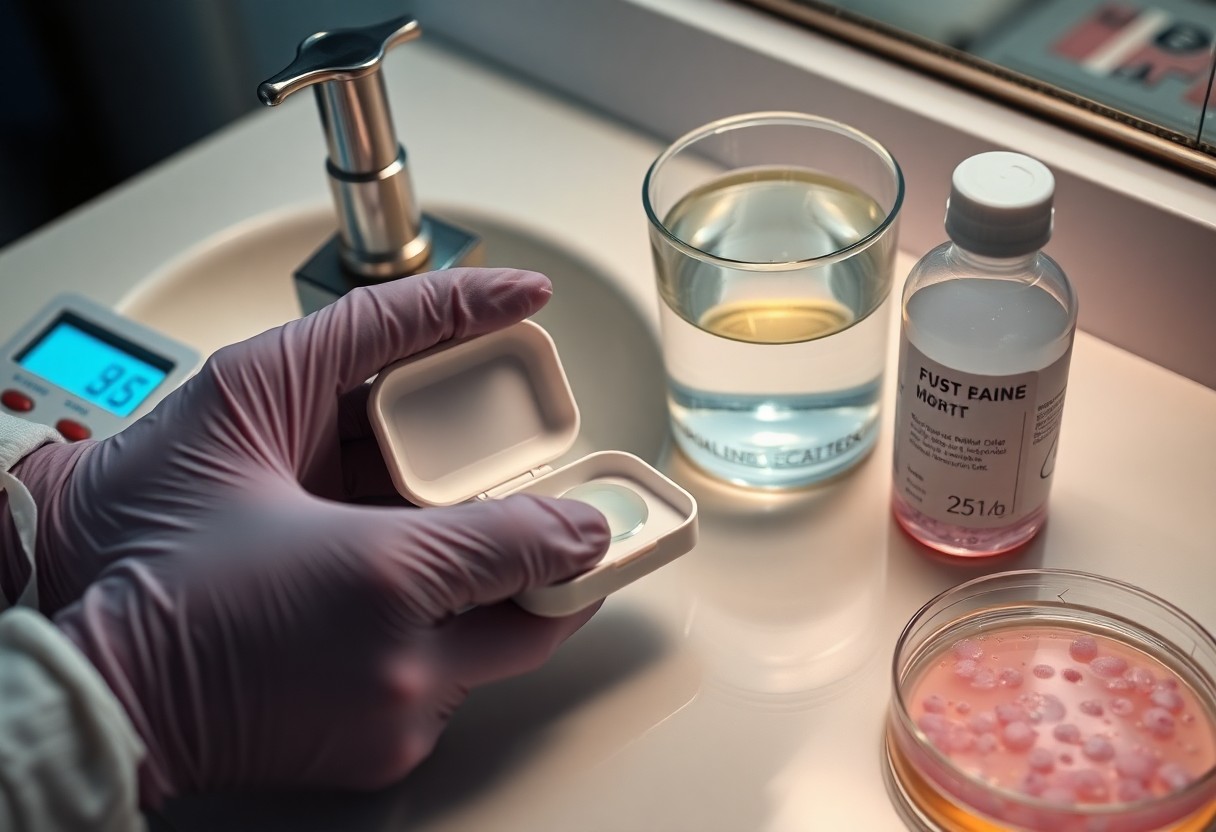
When you handle lenses, your hands and the water you use directly affect comfort and infection risk. Wash with soap for at least 20 seconds and dry with a lint‑free towel to remove oils and microbes; by contrast, hard or untreated water leaves mineral films and higher microbial loads that increase deposit buildup and irritation. If your local supply comes from a private well or has known issues, strict hygiene and using proper contact solutions are crucial.
Effective handwashing and drying techniques
Wet hands, lather soap, and scrub for a minimum of 20 seconds, focusing on fingertips, between fingers, thumbs, and under nails; rinse thoroughly and dry with a lint‑free or disposable towel to prevent fiber transfer. If no soap is available, an alcohol‑based hand rub is better than nothing, but wait until hands are fully dry before touching lenses. Small lapses in drying significantly increase microbial transfer to lenses.
Risks of tap water on hands and transfer to lenses
Tap water can contain organisms such as Acanthamoeba that survive standard disinfection and have been implicated in severe contact‑lens keratitis; rinsing lenses or cases with tap water or wetting lenses with tap water increases that risk. Outbreak investigations repeatedly link lens‑related infections to water exposure, so never use tap water to rinse lenses, top off solutions, or clean cases.
Municipal systems lower many bacteria with chlorine, but Acanthamoeba cysts resist chlorine and persist in plumbing biofilms; untreated well water often shows higher heterotrophic plate counts and coliforms. Mineral‑rich hard water accelerates protein and lipid deposits, causing blurred vision and discomfort. If local water quality is poor, use sterile multipurpose or hydrogen‑peroxide solutions, replace cases every 3 months, and avoid showering or swimming while wearing lenses to reduce infection and improve comfort.
Lens care solutions and water alternatives
Your local water quality and hand hygiene directly shape lens comfort: if your municipal or well supply has higher mineral content or microbial counts, you’ll feel more irritation and risk infection when you expose lenses to tap water. Use a proper solution for cleaning and never rinse or store lenses in tap, distilled, or well water – Acanthamoeba and other pathogens thrive in those environments. Rub-and-rinse for 10-15 seconds, dry your hands with a lint-free towel, and prefer sterile products to keep lenses comfortable and safe.
Multipurpose vs. hydrogen peroxide systems: pros and cons
You’ll find multipurpose solutions convenient for daily cleaning and storage, while hydrogen peroxide systems deliver stronger disinfection but demand strict compliance: most peroxide systems require a full neutralization period (commonly ~6 hours) before lenses contact your eyes. Multipurpose solutions work well for bacteria and fungi with proper rub-and-rinse technique, yet they offer limited activity against Acanthamoeba. If your local water quality is marginal, peroxide systems reduce microbial risk – but you must never put non‑neutralized peroxide-treated lenses into your eyes.
Multipurpose vs Hydrogen Peroxide – key differences
| Disinfection strength | Multipurpose: Good for bacteria/fungi; less effective vs Acanthamoeba. Hydrogen peroxide: Superior broad-spectrum kill when neutralized. |
| Convenience | Multipurpose: One-step daily use. Hydrogen peroxide: Two-step system, longer process. |
| Time | Multipurpose: Immediate use after rinse. Hydrogen peroxide: Requires ~6 hours to neutralize in many kits. |
| Safety risk | Multipurpose: Lower risk of chemical injury. Hydrogen peroxide: Severe irritation if lenses inserted before neutralization. |
| Cost | Multipurpose: Generally cheaper. Hydrogen peroxide: Often pricier per cycle. |
| Compatibility | Multipurpose: Compatible with most soft lenses. Hydrogen peroxide: Compatible with many but check manufacturer guidance. |
| User errors | Multipurpose: Skipping rub-and-rinse reduces efficacy. Hydrogen peroxide: Risk from incomplete neutralization or using wrong case. |
Safe rinses and when to use sterile saline
You should use sterile saline for final rinses, rewetting, or when your eyes feel dry, but not as a disinfecting step: saline is sterile and isotonic, so it soothes without killing microbes. Avoid tap or bottled water for any lens contact; never rinse lenses with tap or well water because that dramatically increases your risk of Acanthamoeba keratitis. Prefer single‑use saline vials when you’re traveling or if your local water quality is poor, and always handle lenses with washed, dried hands.
When choosing saline, check the label and expiry: single‑use vials virtually eliminate cross‑contamination compared with multi‑use bottles, which can become colonized if repeatedly topped up. If you experience recurrent discomfort in an area with older plumbing or frequent boil‑water advisories, switch to peroxide disinfection plus sterile saline for final rinse, and discard solution and case per manufacturer instructions to minimize microbial regrowth.
Showering, swimming, and water exposure
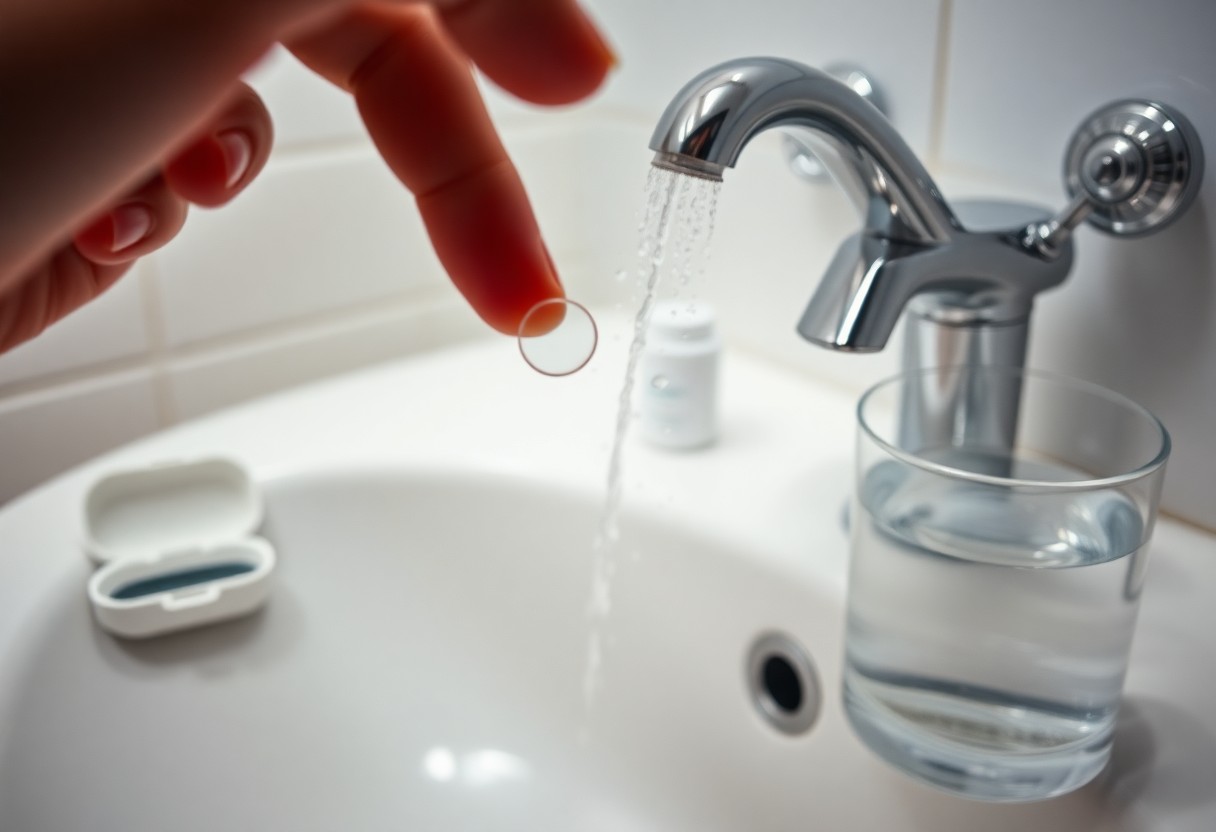
When you wear lenses in water, even brief contact deposits minerals and microbes from your local supply or natural sources onto the lens surface, increasing irritation and infection risk; if your area uses well water or has boil advisories, the risk rises. Follow the CDC’s Healthy Habits: Keeping Water Away from Contact Lenses for practical steps to keep water off your lenses and protect comfort.
Risks from pools, lakes, hot tubs, and tap showers
Pools treated with chlorine reduce many bacteria but do not eliminate Acanthamoeba, and hot tubs’ warm temperatures promote microbial growth. Natural bodies of water can harbor amoebae and algae that cling to lenses, while tap showers can aerosolize microorganisms and dislodge biofilm. Outbreak investigations have repeatedly traced severe keratitis cases to lens‑water contact; if you have redness, pain, or vision changes after exposure, seek eye care immediately.
Protective strategies: goggles, daily disposables, and timing
Seal water out with tight‑fitting swim goggles and plan to use daily disposables when you’ll be in or near water-discard them after exposure to remove contaminated lenses and cases. Wait until your face and hair are dry before inserting lenses, and always wash and fully dry your hands with soap before handling lenses. If local water turbidity or advisories are high, opt for glasses or prescription swim goggles instead.
For reusable lenses, rub and rinse with multipurpose solution and follow the manufacturer’s disinfection cycle; consider a 3% hydrogen peroxide system for stubborn exposures but follow neutralization steps exactly. Replace your lens case every 1-3 months and never rinse lenses or cases with tap water-this is a common source of Acanthamoeba. If you swam with lenses, discard daily disposables immediately; if reusable lenses feel gritty after water contact, stop wearing them and contact your eye care provider within 24 hours.
Recognizing irritation and infection
When your eyes feel off – more than routine dryness – you need to distinguish between mild irritation and early infection. Contact lens wearers who use tap water, shower with lenses on, or skip proper hand hygiene face higher risk from microbes like Pseudomonas and Acanthamoeba. Symptoms can escalate within 24-48 hours; remove your lenses, irrigate with sterile solution, and monitor pain, vision, and discharge closely.
Common symptoms and mild irritants
You’ll usually notice mild redness, tearing, a gritty sensation, or slight blurring that improves after removing lenses. Protein deposits, chlorine from pools, or overnight wear (which raises infection risk ~6-8×) commonly cause this. If symptoms ease after rinsing with fresh multipurpose solution and replacing the case, it’s likely a mild irritant; if symptoms persist beyond 24 hours or worsen, seek professional evaluation.
Red flags requiring urgent professional care
You should seek urgent care if you experience severe eye pain, marked vision loss, intense light sensitivity, a white spot on the cornea, or thick purulent discharge. These red flags suggest microbial keratitis or Acanthamoeba infection often linked to tap water exposure. Rapid deterioration over 24-48 hours or any new floaters demands same-day assessment to reduce the risk of permanent vision loss.
In urgent evaluation the clinician performs a slit‑lamp exam, may obtain corneal scrapings for culture and starts empiric topical antibiotics; if Acanthamoeba is suspected from recent tap‑water exposure they’ll add anti‑amoebic drops (biguanides). Hospital admission for intensive therapy occurs in severe cases. Acting within 24-48 hours improves outcomes and lowers the chance of corneal scarring or permanent vision loss.
Practical prevention and comfort tips
You should never rinse lenses or the case with tap water and must wash your hands with soap and water for at least 20 seconds before handling lenses; use a lint‑free towel to dry. Switch to daily disposables if mineral buildup from your local supply causes deposits, and replace your case every 3 months. Use preservative‑free drops for transient dryness and sterile solutions for storage. Perceiving how small changes in water quality, hand hygiene, and lens comfort affect your eyes guides safer choices.
- Never expose lenses to tap water – risk of Acanthamoeba and microbes.
- Wash hands 20 seconds, dry with lint‑free towel before touching lenses.
- Rub and rinse lenses 10-20 seconds each side with approved solution.
- Replace case every 3 months and consider daily disposables for problem water.
Daily habits, storage case hygiene, and replacement schedules
You should rub and rinse lenses with multipurpose solution for about 10-20 seconds per side, discard solution from the case after each use, rinse the case with fresh solution (not tap water), and air‑dry upside down. Replace lenses on the manufacturer schedule – daily, two‑week, or monthly – and swap the case every 3 months. If your water is hard or chlorinated, using daily disposables reduces buildup and irritation.
When to consult your eye care professional or change lens type
You must seek professional care if you get persistent redness for more than 48 hours, focal eye pain, sensitivity to light, blurred vision, or thick discharge – schedule an exam within 24-48 hours; for sudden vision loss or severe pain, get immediate care. Consider switching to daily disposables, a silicone‑hydrogel material, or reduced‑deposit lenses if symptoms persist despite good hygiene.
If you’ve been exposed to tap water (showering or swimming with lenses) and develop escalating pain or tearing, mention that history specifically because infections like Acanthamoeba keratitis are rare but can require months of topical therapy and sometimes corneal transplantation. You should also request culture or scraping if your clinician suspects microbial keratitis; prompt antimicrobial therapy within 24 hours significantly improves outcomes. Switching lens modality after documented infection reduces recurrence risk.
Summing up
Considering all points, you can reduce eye irritation by checking your local water quality, practicing rigorous hand hygiene before touching lenses, and avoiding showering with contacts – see The Hidden Dangers of Showering with Contact Lenses for details; these steps help preserve lens comfort and lower infection risk so you can wear lenses safely.
FAQ
Q: How can my local tap water cause eye irritation when I wear contact lenses?
A: Tap water varies in mineral content, chlorine levels and microbial load. Hard water leaves mineral deposits on lenses that make surfaces rough and attract protein build‑up, causing grittiness and blurred vision. Chlorine or pool chemicals can sting and strip protective tear film. Most importantly, untreated or contaminated water can carry microbes (including Acanthamoeba) that attach to lenses and lead to serious infections. Do not rinse or store lenses in tap water; use manufacturer‑recommended contact solutions or sterile saline and follow any local water advisories after plumbing work, floods or boil‑water notices.
Q: What role does hand hygiene play in lens comfort and eye health?
A: Proper hand washing removes oils, lotions, cosmetics and microbes that transfer to lenses and the eye. Wash hands with plain soap and running water for ~20 seconds, rinse well and dry with a lint‑free towel before handling lenses. Avoid soaps with heavy moisturizers, perfumes or antibacterial residues that can leave films on lens surfaces. If you must use hand sanitizer, let hands air‑dry completely before touching lenses to avoid chemical residue contact.
Q: What practical steps should I take to reduce irritation if my area’s water quality is poor?
A: Use daily disposables when possible, or follow a strict care routine: never expose lenses or the case to tap water, rub and rinse lenses with fresh contact solution, replace solution daily, and clean and air‑dry the case regularly (replace every 3 months). Avoid swimming or showering with lenses; wear tight goggles if swimming is unavoidable. Check local water quality reports or advisories and consider switching to preservative‑free saline for final rinses if you’re sensitive. See an eye care professional promptly for persistent redness, pain, light sensitivity or discharge.
