
Sensitive Eyes? Daily Disposable Lenses May Be the Solution
Most of the time you can reduce unexplained irritation by switching to Daily Disposable Contact Lenses, which offer fresher, deposit-free comfort and lower allergen buildup. If your eyes sting or redden, you may be at increased risk of infection from reused lenses; switching can be a safer, more comfortable option. Talk to your eye care provider about trials and immediate steps to stop irritation and protect your vision.

Over time, if you experience unexplained irritation from contacts, daily disposable lenses can offer a safer, simpler option by eliminating lens buildup and reducing allergens; they can also lower your risk of infection compared with reusable lenses and often restore comfort within days. Ask your eye care professional about trying dailies and switching to a fresh pair each day to address sensitivity and reclaim your comfort-this practical change can be the quickest step you take toward symptom relief.
Key Takeaways:
- Daily disposables deliver a fresh lens each day, reducing buildup of proteins, lipids and environmental irritants that commonly cause redness and discomfort.
- They eliminate cleaning solutions and cases that can trigger reactions, and lower handling-related contamination and infection risk.
- Experiencing unexplained irritation? Ask your eye care provider about switching to daily disposables, request a trial pair, or schedule a fitting to compare comfort and find relief.
Key Takeaways:
- Daily disposables reduce protein, lipid and allergen buildup on lenses, often easing itchiness and dryness for sensitive eyes.
- Single‑use lenses lower days‑to‑day irritation and can improve comfort compared with reused lenses that accumulate deposits and microbes.
- Switching is simple: trial a daily disposable pack or consult your eye care provider to find the best fit; if irritation continues, seek an eye exam promptly.
If unexplained irritation is affecting your day, try switching to daily disposable lenses for one to two weeks to see if symptoms improve. Order a trial pack or starter set today and book a quick consultation with your eye care provider to confirm fit and prescription. If discomfort persists, stop lens wear and schedule an exam to rule out infection or other causes.
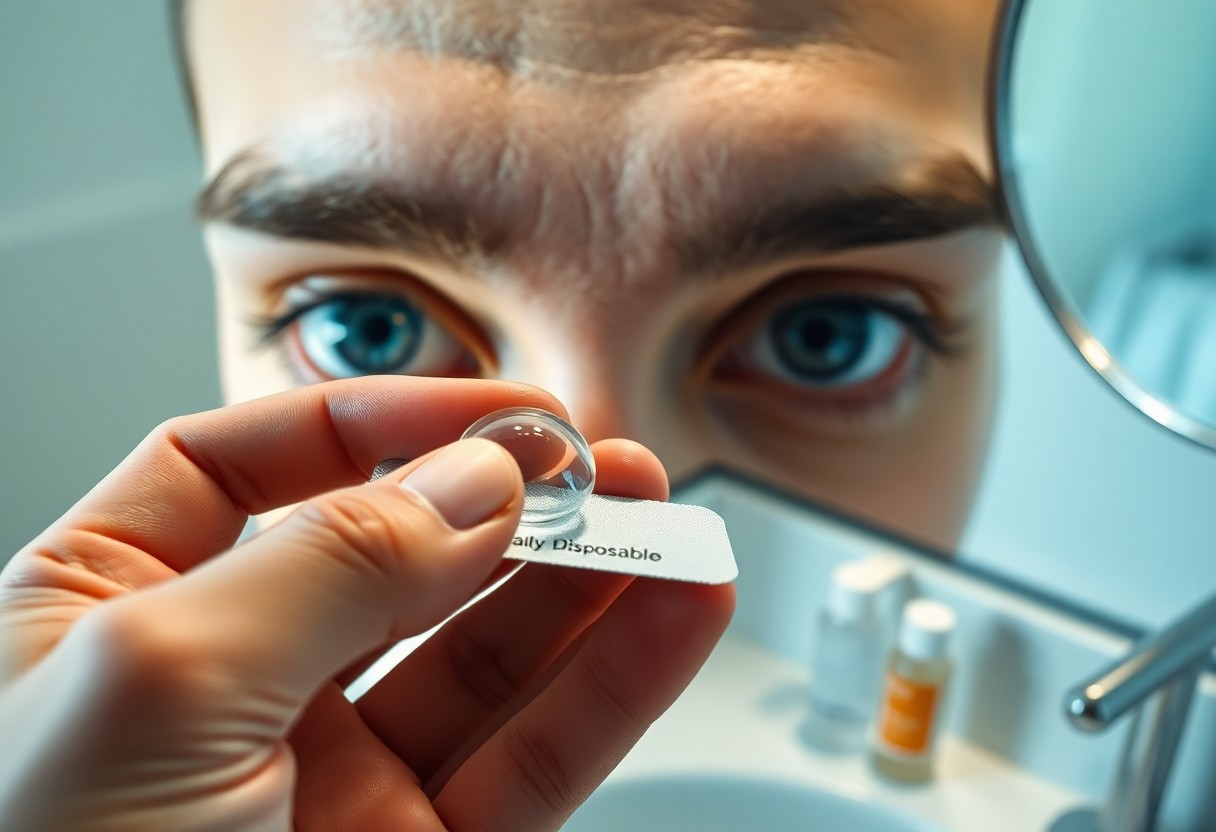
Why your eyes feel irritated
Pain, grittiness or blurry vision often stem from a handful of mechanical and biochemical problems: unstable tear film (tear breakup time under 10 seconds signals dryness), lens deposits that trap allergens or microbes, solution sensitivities, or poor lens fit. You may notice symptoms spike during long screen sessions or in dry, air‑conditioned rooms. Persistent redness, increasing pain, or any drop in vision beyond a day warrants prompt attention because infection or corneal damage can follow.
Common causes: dryness, allergies, deposits, environment
Dryness often results when your blink rate falls from ~15-20 to ~6-8 blinks per minute during screen use, reducing tear spread; tear film instability and low humidity worsen it. Seasonal pollen and pet dander provoke allergic reactions in up to ~30% of people with rhinitis, increasing itch and tearing. Protein/lipid deposits can form within 1-14 days on reusable lenses, while smoke, AC and chlorine amplify irritation; switching to daily disposables removes deposits and cuts a major source of lens‑related irritation.
How to tell if your contacts are the culprit
If symptoms ease within hours of removing lenses or stop completely when you wear glasses for 48 hours, your contacts are the likely cause. You should watch for consistent patterns: irritation that begins soon after insertion, increases through the day, or is worse with a specific solution or lens age. Blurred vision, foreign‑body sensation, or lens fogging that resolves off‑lens points strongly to lens‑related issues rather than plain dry eye.
To narrow it down further, try a simple diagnostic routine: stop lens wear for 48-72 hours, switch to daily disposables for a 1-2 week trial, and note changes; many patients report measurable relief within 48 hours. Check for solution intolerance by eliminating multipurpose solutions and using preservative‑free drops. Seek immediate care if you experience severe pain, discharge, marked vision loss, or light sensitivity-these are red flags for infection. If a trial with daily disposables improves symptoms, consider discussing a permanent switch with your eye care professional to reduce deposits and daily handling risks.
Why your eyes feel irritated
When your eyes sting or feel gritty, mechanical and biological factors are usually at play: tear-film instability from reduced blink rate during screens dries the surface, and about 50% of contact lens wearers report intermittent discomfort. Lens friction, trapped debris, and preservatives can amplify irritation within hours. Switching to lenses that minimize deposits and surface friction often reduces symptoms quickly; use lubricating drops and scheduled blink breaks if you spend long stretches on digital devices.
Common culprits: dryness, allergies, deposits, environment
You often face dryness from low humidity or prolonged screen time, seasonal allergies from pollen or pet dander, and protein/lipid deposits that build up on reused lenses-deposits can become noticeable after 3-7 days of wear. Smoke, air conditioning, and chlorinated pools worsen symptoms. Using daily disposables eliminates deposit buildup, and controlling indoor humidity (40-60%) plus antihistamine drops during peak allergy season can significantly cut flare-ups.
Red flags: infection, inflammation, when to see an eye care professional
You should seek care immediately for severe pain, sudden blurred vision, intense light sensitivity, thick discharge, or a persistent red eye. Any new symptom that lasts more than 24-48 hours while wearing lenses warrants prompt evaluation. Delaying assessment increases the risk of corneal ulcers and lasting vision damage; arrange urgent care within 24 hours if symptoms worsen.
Microbial keratitis affects roughly 2-4 per 10,000 daily-wear soft lens users annually and jumps with overnight wear; case reports show ulcers can develop within 48-72 hours. If you spot a white corneal spot, escalating pain, or changes in pupil reaction, stop lens wear immediately, bring your lenses and case to the appointment, and request a corneal exam and culture if infection is suspected. Switching to daily disposable lenses and following your practitioner’s treatment plan lowers recurrence risk and helps protect your vision-contact your eye care provider now if unexplained irritation persists.
How daily disposables differ
Daily disposables are single‑use lenses you discard each night, so you avoid overnight buildup of proteins, lipids and microbes that often cause unexplained irritation; many wearers report clearer comfort within days. You also skip cleaning solutions and lens cases, which lowers exposure to allergens and biofilms – Why Choose Daily Disposable Contact Lenses? Learn More!
Lens materials, breathability, and moisture technologies
You’ll find daily disposables made from hydrogels or silicone‑hydrogels; silicone‑hydrogels provide higher oxygen transmissibility while modern hydrogels use surface wetting agents. Water‑gradient designs (e.g., Delefilcon A) deliver very high surface hydration, and wetting polymers like PVP or added hyaluronic acid keep lenses lubricated so you get fewer midday dry spots and more stable vision during long screen sessions.
Hygiene advantages: no deposits, fewer allergens, lower infection risk
Because you start each day with a fresh lens, deposit load is minimal, allergens have less time to accumulate, and studies link dailies with significantly lower rates of inflammatory events versus reusables; for sensitive eyes, that often means reduced redness, itching, and fewer flare‑ups after swimming or dusty exposure.
Lens cases and cleaning solutions are common sources of contamination – surveys show case contamination in roughly 30-70% of users – and biofilms can survive routine cleaning, increasing bacterial load on monthly lenses. Deposits also change lens surface wettability and can trigger giant papillary conjunctivitis or discomfort within 1-2 weeks for some wearers. Switching to daily disposables removes the storage step, cuts handling errors, and eliminates accumulated deposits, which in clinical analyses corresponds to about a halving of contact lens‑related inflammatory complications; if you’ve been experiencing unexplained irritation, a trial of daily disposables and a quick consult with your eye care provider often resolves symptoms and pinpoints whether lens material or fit needs adjustment.
How daily disposable lenses reduce irritation
By removing the lens nightly and giving you a fresh pair each morning, daily disposables limit the protein, lipid, allergen and microbial buildup that often causes redness and grittiness. Clinical studies show up to a 50% lower rate of inflammatory events versus reusable lenses, and you avoid imperfect cleaning routines that leave residue. For unexplained irritation, switching to dailies often reduces symptoms within days.
Fresh lens each day – less protein, allergens, and microbial buildup
Replacing lenses daily prevents the protein and allergen films that can accumulate within hours and become binding sites for pollen and dust; it also curtails biofilm formation that promotes infection. You skip cleaning solutions that can leave residues or trigger sensitivities, and many patients report fewer allergic flares and less morning grit after switching to dailies.
Comfort advantages from modern materials and surface technologies
Modern materials like silicone hydrogel deliver much higher oxygen transmission (Dk/t values commonly in the 80-150 range) while surface technologies-plasma treatments, hydrophilic coatings and water‑gradient designs with >80% surface hydration-help lenses stay lubricious. You’ll typically notice reduced dryness and less end‑of‑day discomfort compared with older reusable lenses.
In practice, patients with unexplained irritation often report measurable improvement within 48-72 hours when fitted with a daily silicone‑hydrogel, water‑gradient lens; clinicians observe reduced corneal staining and longer tear breakup times in small trials. Ask your eye care professional for a supervised trial pair and track your symptoms over a week to confirm whether daily disposables deliver the relief you need.
Benefits for sensitive eyes
You’ll notice fewer deposits and rancid buildup when you use daily disposables, because you replace lenses every day instead of storing and cleaning them; that lowers exposure to allergens, preservatives and microbes. Clinical comparisons and patient reports link dailies to reduced irritation and fewer inflammatory events. If you want a quick read on dryness benefits, see Are Daily Contacts Better for Dry Eyes?
Clinical and user evidence for reduced irritation and better comfort
Trials and large surveys show you can expect measurable gains: many studies report a roughly 30-50% drop in reported discomfort and fewer corneal staining incidents with daily disposables versus monthly lenses. In clinical audits of symptomatic patients, switching to dailies reduced follow‑up visits for irritation by about half, and patient comfort scores typically improve within days of the change.
Everyday improvements: morning comfort, all-day wear, fewer drops
Morning comfort improves because you start with a fresh lens surface, so you’ll often need fewer rewetting drops-many users go from three-plus drops daily to zero or one. You’ll also experience more consistent end‑of‑day comfort and a lower chance of midday redness, helping you tolerate longer wear without frequent interruptions.
Try a 1-2 week trial to see real gains: for example, many patients report going from 2-4 hours of uncomfortable wear to 8-12 hours with dailies, and you’ll avoid solution‑related sensitivities by eliminating cleaning-if you still have unexplained irritation, get evaluated promptly, since persistent symptoms can indicate infection or an allergic response that needs treatment; ask your eye care professional about samples so you can compare comfort before committing.
Selecting the right daily disposable
Material, oxygen permeability, and hydration features to compare
Compare silicone hydrogel versus conventional hydrogel: silicone hydrogels typically offer higher oxygen transmissibility (Dk/t often 60-150) which helps reduce hypoxic stress, while hydrogels vary in water content (38-80%) affecting initial comfort and dehydration. Check for surface treatments or wetting agents like PVP that maintain moisture, and note lens modulus (<0.3-0.8 MPa) since lower modulus often improves comfort for sensitive eyes.
Key material and performance metrics
| Feature | What to look for / Why it matters |
|---|---|
| Material type | Silicone hydrogel = higher oxygen; hydrogel = softer feel but may dehydrate faster |
| Oxygen (Dk/t) | >60 Dk/t reduces corneal hypoxia; aim higher if you wear lenses most of the day |
| Water content | Lower water + wetting agents often better for evaporation-prone eyes; high water can feel juicy initially |
| Surface tech | Embedded wetting agents or plasma coatings cut deposit build-up and irritation |
| Modulus | Lower modulus improves comfort for sensitive lids; higher modulus can stabilize torics |
Fit, prescription options, and arranging a trial with your eye care provider
Have your base curve and diameter checked; a misfit causes edge irritation even with the best material. Many daily disposables now cover common spherical ranges and offer toric or multifocal variants, so bring your current prescription and note any lens rotation or blur. Ask your eye care provider for a 1-2 week trial and instructions to wear fresh lenses daily without reusing to properly assess irritation.
Bring a symptom diary and details of previous lens brands; your provider should perform a tear-film assessment (TBUT) and vital‑dye staining to detect subtle surface damage. Trial lenses often come as sample packs-wear them for full waking hours for at least a week and report if persistent redness, pain, or vision changes occur. If you’re experiencing unexplained irritation, schedule a fitting or request trial dailies now to determine whether switching resolves your symptoms.
Choosing the right daily disposable
Key features to compare: material, water content, surface treatment, UV
You should weigh material (silicone hydrogel vs hydrogel), water content (commonly 38-80%), surface treatments (plasma, PEG/Hydra-PEG) that resist deposits, and whether the lens offers UV protection. Silicone hydrogels generally deliver better oxygen supply and less hypoxic stress; higher water content can feel softer but may increase dehydration in low-humidity environments. After you compare these features, trial a pair to see if irritation and redness drop.
- Material: silicone hydrogel = higher oxygen transmission; hydrogel = softer feel but more deposit-prone.
- Water content: low-to-moderate (38-55%) often balances comfort and dehydration; high water (>60%) may dry faster in A/C or heated environments.
- Surface treatment: plasma or PEG coatings reduce lipid/protein build-up and improve comfort for sensitive eyes.
- UV protection: blocks some UVA/UVB but is not a substitute for sunglasses; choose lenses with UV-blocking if outdoor exposure is high.
- After switching to dailies, monitor for persistent pain, blurred vision, or increasing redness and stop wear if symptoms worsen.
Key Features Comparison
| Feature | What to check |
| Material | Oxygen transmission (silicone hydrogel better), deposit tendency, and compatibility with your tear film. |
| Water content | Balance between initial comfort and susceptibility to dryness in low-humidity settings. |
| Surface treatment | Type of coating (plasma/PEG) and how it reduces deposits or improves wettability. |
| UV protection | Percentage of UVA/UVB blocked and whether you still need sunglasses for full protection. |
Prescription, fit, and when to ask your eye care professional
You need a correct prescription, base curve and diameter so the lens centers and moves properly; ill-fitting lenses often cause unexplained irritation. Seek help if you have persistent redness, pain, discharge, or sudden blurred vision-these signs can indicate an infection or inflammatory response and require prompt evaluation. Your practitioner can run a fitting and suggest a trial pair of daily disposables tailored to your eyes.
More detail: typical soft lens base curves are around 8.3-8.8 mm and diameters 13.8-14.5 mm; power ranges often span from about -12.00 to +8.00, with toric and multifocal daily options available. You should bring a log of symptoms, wear time, and environments (office A/C, screen use) to your appointment; tests like tear-breakup time, meibography, or tear-film osmolarity help identify underlying dry eye or meibomian gland dysfunction so your clinician can match a lens and care plan that reduces irritation and improves comfort.
Daily habits that boost comfort
Small daily changes make a big difference: drink water regularly, use preservative‑free rewetting drops (1-3 times as needed), follow the 20‑20‑20 rule during long screen sessions, and keep indoor humidity around 30-50% with a humidifier. You’ll feel less grit and fewer end‑of‑day withdrawals if you avoid direct airflow from fans or vents, swap to daily disposables to cut protein buildup, and replace makeup and mascara every 3 months to limit lens contamination.
Insertion/removal, blink and screen habits, and environmental tweaks
Wash and dry your hands for ~20 seconds before handling lenses and check orientation; place the lens on your index finger, look up and set it on the sclera, then blink to center. For removal, look up, slide the lens down and gently pinch to remove. When you work at screens, blink intentionally or use 20‑second microbreaks every 20 minutes; consider preservative‑free drops every 4-6 hours and a humidifier at home or office to prevent evaporation.
When to skip lenses, signs to stop use, and follow‑up care
If you experience pain, sudden vision change, persistent redness, discharge, or light sensitivity, remove lenses immediately and do not reuse them. You should contact your eye care professional and seek assessment within 24-48 hours for pain or vision loss; for mild irritation, skip lenses for 24 hours and use preservative‑free drops, but escalate care if symptoms worsen or don’t improve.
Clinics often see patients with unexplained irritation who improve after a same‑week exam and a switch to daily disposables; studies estimate contact‑related microbial keratitis rates at about 2-5 per 10,000 wearers annually for daily soft lenses. When you seek care, bring the lenses, case and solution, avoid OTC redness drops with vasoconstrictors, and follow prescribed treatment fully-doing so both treats infection early and helps you decide if daily disposables or a new wearing schedule will stop recurring irritation. Schedule an exam if symptoms persist.
Switching safely and easily
You can switch to daily disposable lenses to cut down on protein buildup, reduce allergen exposure, and eliminate cleaning steps; clinical comparisons show lower complication rates versus reusable lenses. Start with a 7-14 day trial, track end-of-day comfort and tear breakup time, and note any persistent redness. For detailed advantages, read Benefits of Daily Disposable Contact Lenses.
Step-by-step trial plan and fitting tips
Begin with a focused trial: wear daily disposables during waking hours for 7-14 days, increasing wear by 1-2 hours daily if mild dryness appears; schedule a follow-up at 3-7 days to check fit, movement, and tear film; consider material changes (silicone hydrogel vs hydrogel) based on lipid quality. Assume that you’ll need one minor adjustment-power, base curve, or lubricant-after the initial follow-up.
- Initial exam: baseline refraction, slit-lamp check, tear break-up time
- Trial lens: one material/type for 7-14 days
- Wear schedule: start short, build to full day over a week
- Follow-up: 3-7 days for fit and comfort, 1 month for adaptation
- Hygiene: single-use only-no rinsing or reusing
Trial Plan at a Glance
| Step | Timing / Why |
|---|---|
| Baseline exam | Day 0 – refraction, ocular surface assessment |
| Start trial | Day 1 – wear during waking hours, note symptoms |
| Early follow-up | Day 3-7 – adjust fit/power, check lid interaction |
| Evaluation | Day 14-30 – confirm comfort and recommend prescription |
Managing adjustment symptoms and when to stop
Mild stinging, intermittent dryness, or brief blur are common during the first 48-72 hours; use preservative-free artificial tears and limit screen time to help adaptation. Stop wearing lenses and contact your practitioner if you experience severe pain, persistent redness, discharge, or sudden vision loss. If symptoms continue beyond 48 hours despite drops, seek evaluation to rule out infection or surface damage.
Remove lenses immediately if symptoms worsen, rinse with sterile saline, and avoid re‑insertion until examined; clinics generally ask for an assessment within 24-48 hours for persistent irritation. In one case, a patient with unexplained end‑of‑day irritation improved within 72 hours after switching to a different daily material and adding lubricants. If your unexplained irritation remains, book an exam to identify allergic papillary reactions, dry eye subtypes, or the need for an alternative daily lens solution.
Cost, convenience, and access
Comparing upfront cost to long‑term savings and fewer complications
You’ll often pay more per lens with dailies, but when you add up replaced solution, cases, lost workdays, and treatment for irritation or infection, dailies can be cheaper over a year. For example, if reusable lenses plus supplies run you about $30-$50/month, and a 90‑day box of dailies costs $50-$90, your annual out‑of‑pocket can shift in your favor once fewer clinic visits and reduced complication rates are counted. Ask your practitioner for a personalized cost comparison.
Cost vs. value breakdown
| Upfront costs | Long‑term savings & fewer complications |
|---|---|
| $ for boxes of lenses, solutions, cases, and renewals | Less spending on solutions/cases, fewer replacement lenses, fewer clinic visits |
| Typical monthly: solutions $10-$25; reusable lenses $20-$40 | Potentially lower annual total when factoring reduced treatment costs and time off |
| Hidden: time to clean, risk from improper care | Reduced infection/irritation risk with daily disposables-fewer medical interventions |
Samples, trial programs, rebates, and insurance considerations
You can often try daily disposables through free samples or 1-2 week trials from manufacturers and practices; retailers and brands frequently run rebates ranging from about $20 to $100 per year. Check whether your vision plan covers contact lens fitting or materials, and whether you can use an HSA/FSA for lens purchases. If you’re experiencing unexplained irritation, request samples to test comfort before committing.
Many eye care practices keep sample packs of popular daily brands and can enroll you in manufacturer trial programs that last 7-14 days, letting you evaluate comfort during normal wear. Nationwide retailers sometimes offer promo codes and seasonal rebates-combine these with an FSA/HSA payment to lower out‑of‑pocket cost. If your insurer requires prior authorization for specialty lenses, your practitioner can submit medical documentation showing irritation from reusables; that documentation often unlocks coverage or larger rebates for daily disposables. Prioritize trying samples so you verify improved comfort before buying larger boxes.
Cost, coverage, and trying before committing
You’ll find daily disposables often cost more per lens but can lower overall eye‑care expenses by reducing infections, deposits, and doctor visits; expect typical retail ranges of about $30-$120 per month depending on brand and pack size, while switching can cut cleaning-solution and case costs to nearly zero-so weigh monthly spend against fewer irritation-related appointments and better comfort when you’re deciding.
Comparing price, long-term value, and subscription options
You can compare by total monthly outlay, replacement frequency, and potential savings from fewer complications: subscriptions often drop per‑lens cost by 10-30% and add free shipping or replacements, while buying retail gives flexibility to switch brands quickly if irritation persists.
Cost vs. value snapshot
| Upfront price | Daily disposables are higher per lens but avoid solutions and cases |
| Monthly cost example | Typical range: $30-$120/month based on 30-90 pack and brand |
| Long‑term value | Fewer office visits and lower infection risk can offset higher unit cost |
| Subscription perks | 10-30% savings, auto‑refill, hassle‑free returns and trials |
Insurance, rebates, free trials, and sample programs
Many vision plans include a contact lens allowance often in the $100-$200 per year range, and daily disposables are usually FSA/HSA‑eligible; manufacturers and retailers run rebates, coupon codes, and trial offers that can lower your first purchases and let you test comfort before committing.
Doctors commonly provide 1-2 sample boxes or coordinate a 7-30 day trial through the manufacturer so you can see if dailies stop unexplained irritation; use your allowance plus a manufacturer rebate or a subscription first box discount to minimize out‑of‑pocket spend while you confirm whether daily disposables resolve your symptoms.
Final Words
As a reminder, if you’re experiencing unexplained eye irritation, switching to Daily Disposable Contact Lenses: Clear Vision Without the Daily Hassle can lower allergen buildup and lens-related discomfort; consult your eye care professional to try a trial pair and restore the comfortable, clear vision your eyes deserve.
Summing up
Now, if your eyes are frequently irritated by contact lenses, switching to daily disposables can reduce deposits, allergens and solution-related reactions, giving you fresher comfort each day; consult your eye care professional about a trial pair so you can quickly test whether daily disposables resolve unexplained irritation and improve your comfort and eye health.
FAQ
Q: What common factors cause eye irritation while wearing contact lenses even when lenses and solution seem clean?
A: Irritation can come from microscopic protein and lipid deposits that build up on reusable lenses, sensitivity to preservatives in multiuse solutions, reduced oxygen flow from older lens materials, poor lens fit that rubs the eye, and environmental irritants like pollen or smoke. Even contact with tap water or expired solutions can introduce microbes or residues that trigger discomfort. Daily disposable lenses reduce many of these risks by using a fresh, deposit-free lens each day and eliminating the need for cleaning solutions that may irritate sensitive eyes.
Q: How do daily disposable lenses specifically help people with sensitive eyes?
A: Daily disposables provide a brand-new lens surface every day, which prevents buildup of proteins, lipids and environmental debris that contribute to grittiness or itching. They remove exposure to lens-cleaning solutions and their preservatives, lower the chance of microscopic surface irregularities that can irritate the cornea, and reduce handling-related contamination. Many daily disposables are made from high-oxygen, soft materials that improve comfort and reduce redness for people prone to dryness or sensitivity. For allergy-prone wearers, starting each day with a fresh lens can reduce trapped allergens compared with reused lenses.
Q: If I have unexplained irritation, will switching to daily disposables fix the problem and how should I switch safely?
A: Switching often helps but is not guaranteed; unexplained irritation can also signal infection, dry eye disease, or fit issues that require professional assessment. Begin by scheduling an exam with your eye care practitioner to rule out medical causes. If cleared, request a trial of daily disposables-many clinics provide sample packs-so you can test comfort across several days. Follow a proper wear-and-dispose routine, avoid overnight wear unless lenses are approved for it, and report persistent redness, pain, sudden vision changes or discharge immediately. If comfort improves during the trial, your practitioner can prescribe the specific daily material and replacement schedule that best fits your eyes and lifestyle.
Feeling irritated? Try a simple, fast change that often helps
If your eyes sting, feel gritty, or flush for no clear reason, switching to daily disposable lenses is a low-effort, high-impact step to try right away. A fresh lens each morning removes the tiny deposits and solution residues that build up on reusable lenses and often trigger unexplained irritation. Many wearers report noticeably less redness and longer comfortable wear time within days of switching.
Take these practical next steps: book a brief visit or virtual consult with your eye care professional to confirm there’s no infection or fit problem; ask for a sample pack of daily disposables in a high-oxygen, soft material; wear the samples for several consecutive days and track comfort and symptoms; if comfort improves, ask your practitioner about a prescription and easy refill options. If you experience sharp pain, significant vision change, or persistent discharge at any time, stop wearing lenses and seek immediate professional care.
If unexplained irritation is limiting your day, ask your eye care provider about trying daily disposables or order a trial pack from a reputable retailer today-trying a fresh lens for a week is a quick, low-risk way to see if your symptoms ease and your comfort returns.
